Chlor-alkali process products
Electrolysis of brine → NaOH, Cl₂, H₂ and useful products.
Step 1 — Study the figure
Cover the label key on the image, name each numbered part, then check the explanations below.
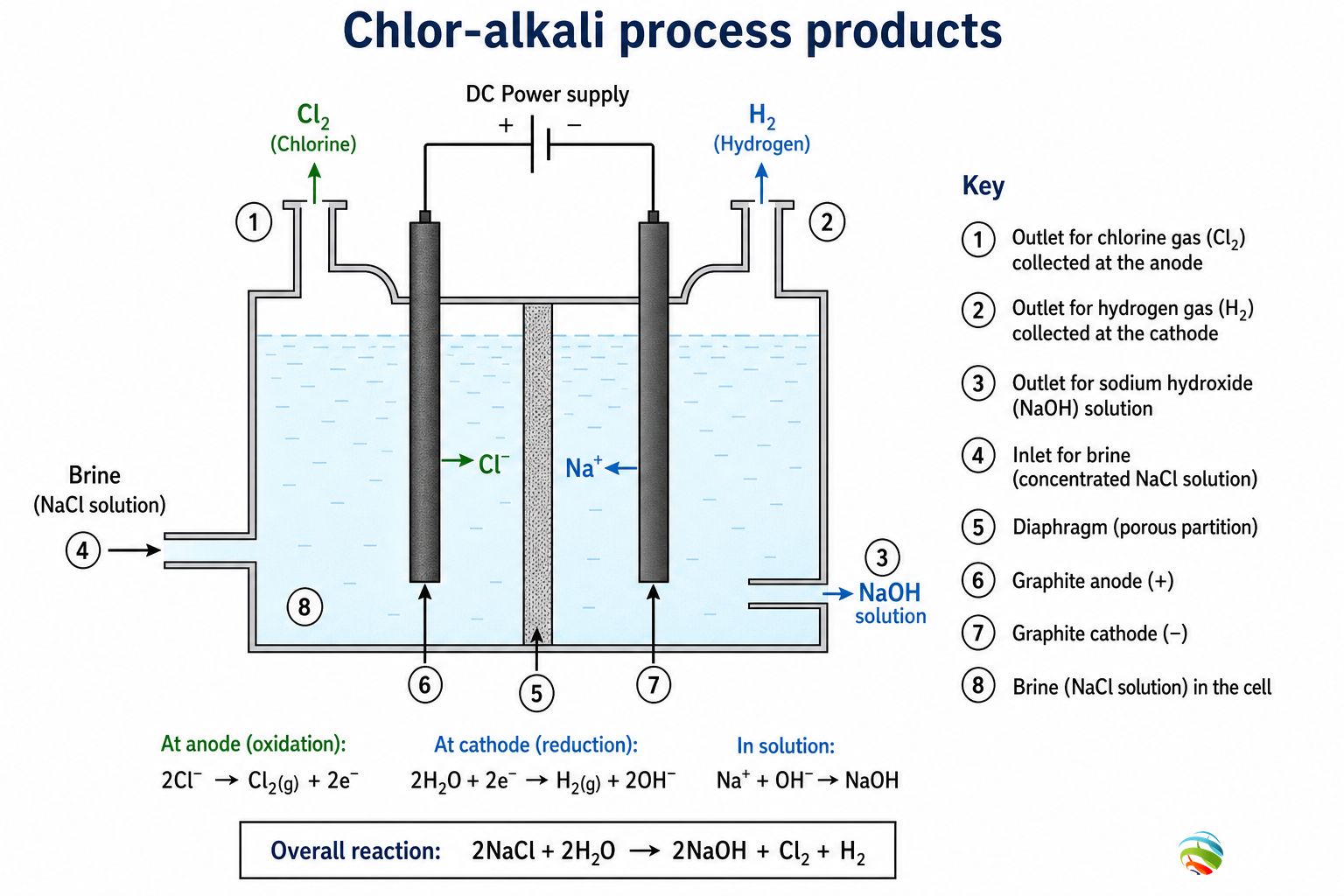

Step 2 — Diagram details for students
What this diagram shows
The chlor-alkali process is electrolysis of brine (concentrated NaCl solution). It produces chlorine gas, hydrogen gas, and sodium hydroxide together. Board questions often ask products at each electrode and one use of each product.
Numbered parts — mark & remember
Match each number on the figure with the meaning below. Say the function aloud once.
1 Brine
Brine is concentrated aqueous sodium chloride used as the electrolyte. Ions in solution move toward the electrodes during electrolysis. Without brine, the industrial chlor-alkali products cannot form in this way.
2 Anode (+)
The anode is the positive electrode where oxidation occurs. Chloride ions lose electrons and chlorine gas is liberated at the anode. Remember: anode → chlorine in this process.
3 Cathode (−)
The cathode is the negative electrode where reduction occurs. Hydrogen ions gain electrons and hydrogen gas is liberated at the cathode. Do not swap anode and cathode gases in diagrams.
4 NaOH in solution
Sodium hydroxide remains in the solution as the useful alkali product. NaOH is used in soap, paper, and many industrial processes. The name chlor-alkali comes from chlorine + alkali (NaOH) products.
How to read this figure
- Trace brine → electrodes → three products: Cl₂, H₂, NaOH.
- Positive anode gives Cl₂; negative cathode gives H₂.
- NaOH is not a gas; it stays dissolved until recovered.
Redraw for board marks
- Draw an electrolytic cell with two electrodes in brine.
- Label anode Cl₂ and cathode H₂ with arrows upward for gases.
- Write NaOH in the solution region.
Board answer tip: Draw the cell, label brine and both electrodes with products, then write one use of each product.
Exam tips — don’t lose marks
- Learn one use each for Cl₂, H₂, and NaOH.
- Chlorine is used for PVC, bleaching powder, etc.; hydrogen for fuels/ammonia context; NaOH for soap.
- Electrode polarity mistakes lose easy marks — practise the labels.