Signs of a chemical reaction
Colour change, gas, precipitate, heat/light — observations that a new substance has formed.
Step 1 — Study the figure
Cover the label key on the image, name each numbered part, then check the explanations below.

Step 2 — Diagram details for students
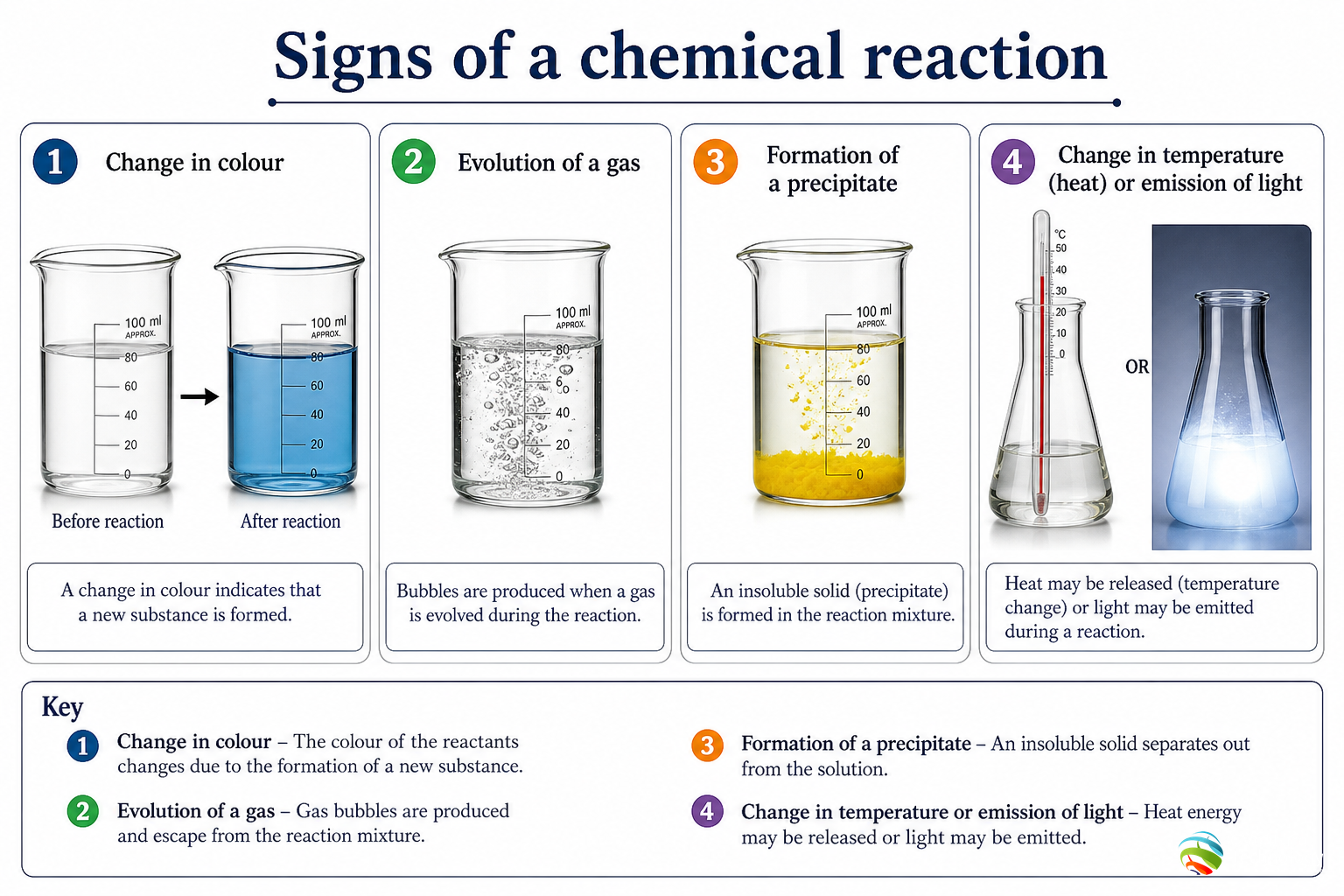
What this diagram shows
This figure shows the four main observations that tell you a chemical reaction has taken place. In Class 10, you must link each observation to a new substance being formed, not only to a physical change. Use it for “observe and conclude” and activity-based board questions.
Numbered parts — mark & remember
Match each number on the figure with the meaning below. Say the function aloud once.
1 Colour change
A chemical reaction often produces a substance with a different colour from the reactants. For example, blue copper sulphate solution becomes pale when iron displaces copper, and a brown coating of copper appears. Always name both the colour change and the new substance in your answer.
2 Gas evolved
Bubbles, fumes, or a smell of gas show that a gaseous product is forming. A common school example is zinc with dilute sulphuric acid releasing hydrogen gas. You may confirm hydrogen with a pop test if the question asks for identification.
3 Precipitate formed
A precipitate is an insoluble solid that appears and often settles in the solution. Lead nitrate mixed with potassium iodide gives a bright yellow precipitate of lead iodide. Write the word “precipitate” and its colour for full observation marks.
4 Heat or light
Many reactions release or absorb energy, so the mixture may become hot, cold, or give light/flame. Burning magnesium in air produces a bright white light and magnesium oxide. Mention temperature change or light whenever the activity shows an energy change.
How to read this figure
- Read each panel as one observation you can write in one clear sentence.
- Connect every observation to a standard NCERT activity so examples come quickly in exams.
- Remember that melting or dissolving alone may be physical changes; chemical change needs a new substance plus such signs.
Redraw for board marks
- Draw four equal boxes with clear headings for the four signs.
- Add a simple beaker or flask sketch in each box.
- Write one short example under each heading.
- Keep labels large and neat for board diagram marks.
Board answer tip: For “signs of chemical reaction”, list all four observations with one example each. If a diagram is asked, use four labelled panels and underline the new substance formed.
Exam tips — don’t lose marks
- Start with the observation, then write the balanced equation if asked.
- Do not confuse precipitate with suspension without settling — say insoluble solid formed.
- Heat/light means energy change; colour/gas/precipitate are substance-change clues.