Food chain and 10% law
Producer → primary → secondary consumer; ~10% energy to next level.
Step 1 — Study the figure
Cover the label key on the image, name each numbered part, then check the explanations below.

Step 2 — Diagram details for students
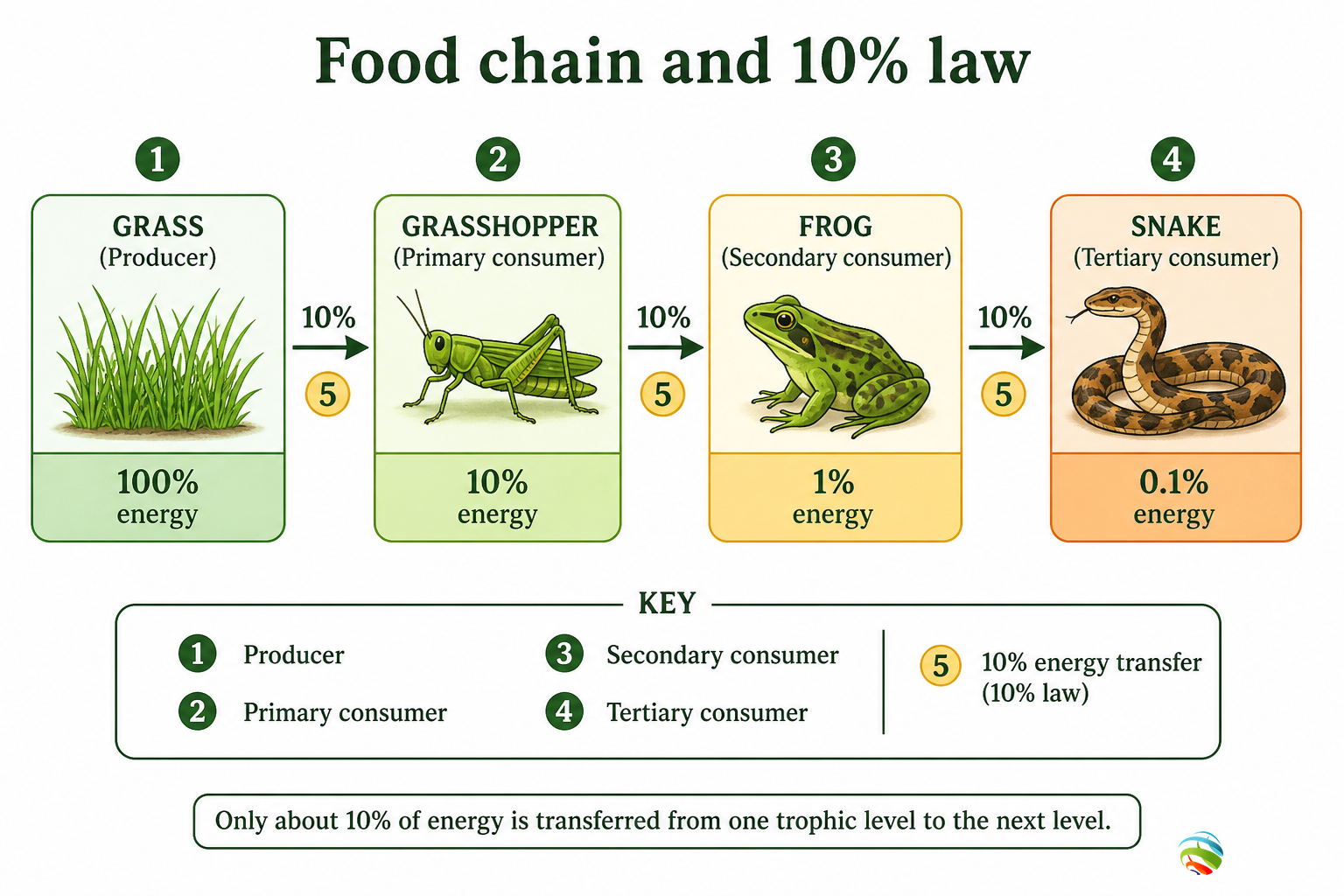
What this diagram shows
A food chain is one linear path of energy flow from producers to consumers. Only about 10% of energy transfers to the next trophic level, so chains stay short. Energy flow is unidirectional, unlike nutrient cycling.
Numbered parts — mark & remember
Match each number on the figure with the meaning below. Say the function aloud once.
1 Producer
Producers are green plants (and some bacteria) that convert sunlight into chemical energy by photosynthesis. They form the first trophic level. About 1% of incident sunlight is fixed by plants in NCERT discussion.
2 Primary consumer
Primary consumers are herbivores that eat producers. Energy available to them is already reduced compared with plant energy. Examples include grasshopper or goat depending on the chain given.
3 Secondary consumer
Secondary consumers eat primary consumers and occupy the next trophic level. Omnivores/carnivores may sit here. Each step loses large energy as heat and life processes.
4 10% law
Roughly ten percent of energy passes to the next trophic level. Because of this loss, food chains rarely have many steps. Always state unidirectional energy flow with the 10% idea.
How to read this figure
- Arrows mean “eaten by” / energy flow direction to the consumer.
- Count trophic levels from producer as level 1.
- Biological magnification increases toxins up the chain.
Redraw for board marks
- Draw a linear chain with arrows.
- Label producer and consumer levels.
- Write 10% on each transfer arrow.
Board answer tip: Draw one chain, mark trophic levels, and explain the 10% law in three lines.
Exam tips — don’t lose marks
- Energy does not cycle like nutrients; it flows and is lost as heat.
- Short chains follow from 10% law.
- Give a concrete example chain in answers.