Domestic electric circuit (simple)
Meter → fuse → main switch → parallel circuits; earth for safety.
Step 1 — Study the figure
Cover the label key on the image, name each numbered part, then check the explanations below.

Step 2 — Diagram details for students
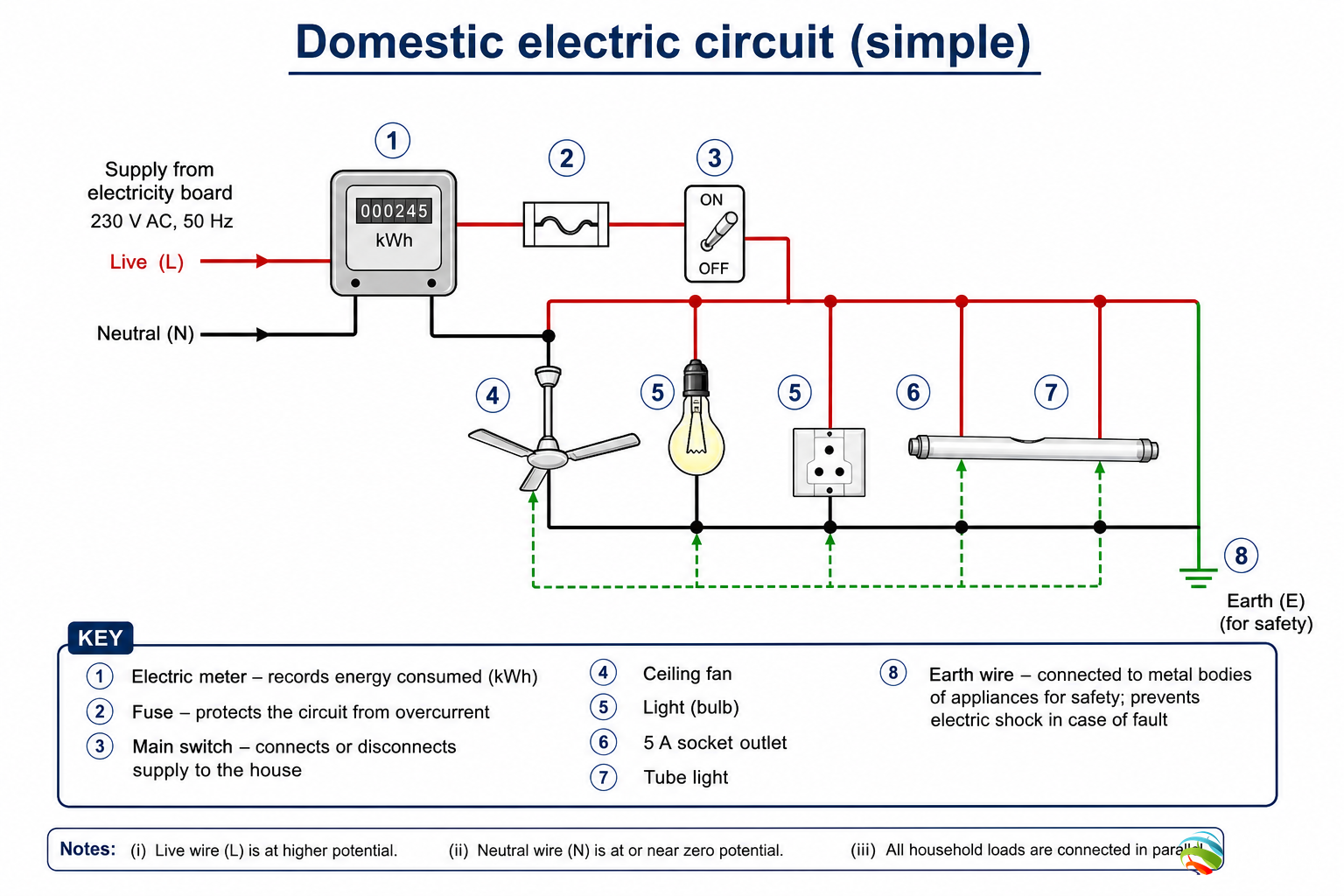
What this diagram shows
A domestic circuit brings supply through meter, fuse, and main switch to parallel household branches. Live and neutral carry current to appliances, while earth wire protects against shock from metal bodies. Overloading and short circuits are key safety ideas.
Numbered parts — mark & remember
Match each number on the figure with the meaning below. Say the function aloud once.
1 Electric meter
The meter records electrical energy used by the household. It sits early in the incoming path. Bills are based on this energy measurement.
2 Fuse
A fuse is a safety device that melts when current becomes dangerously high. It protects wiring during overload or short circuit. After a fuse blows, the fault must be corrected before replacing it.
3 Main switch
The main switch can disconnect the entire domestic circuit for safety. It is used during repairs or emergencies. Place it after meter/fuse according to the simple Class 10 outline.
4 Live / neutral / earth
Live and neutral wires supply appliances; earth is a safety wire connected to the ground. Earth colour is commonly taught as green in Class 10. Earth protects users if a live wire touches a metal body.
5 Parallel loads
Lights, fans, and sockets are wired in parallel branches. Each gets the full supply voltage and can be switched separately. This is why household connection is parallel rather than series.
How to read this figure
- Follow order: meter → fuse → main switch → parallel circuits.
- Fuse for overcurrent; earth for leakage shock protection.
- Short circuit means live touching neutral with huge current.
Redraw for board marks
- Draw a flowchart from meter to parallel loads.
- Label live, neutral, and earth.
- Mark fuse as the safety break point.
Board answer tip: Draw the simple domestic outline and explain fuse and earth wire functions in three lines each.
Exam tips — don’t lose marks
- Overloading is too many appliances drawing excess current.
- Short circuit is live-neutral direct contact.
- Earth wire is for safety, not for normal current return in ideal conditions.