Human brain (main parts)
Fore-brain (cerebrum), mid-brain, hind-brain (cerebellum, medulla).
Step 1 — Study the figure
Cover the label key on the image, name each numbered part, then check the explanations below.

Step 2 — Diagram details for students
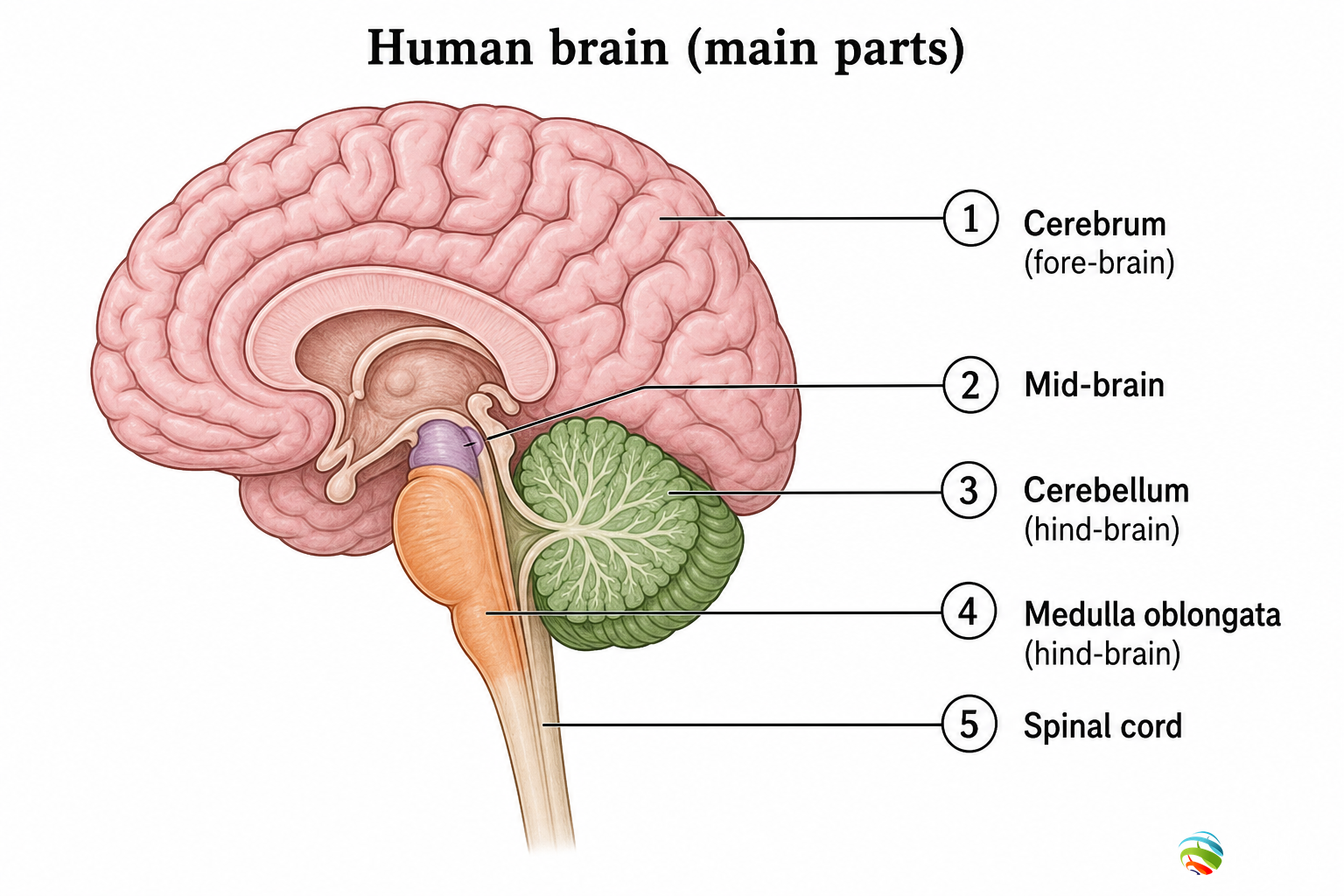
What this diagram shows
Different brain parts have different board-level functions. Fore-brain handles thinking and voluntary decisions, medulla controls involuntary life processes, and cerebellum manages balance and precision. Labelling these regions correctly is a frequent exam demand.
Numbered parts — mark & remember
Match each number on the figure with the meaning below. Say the function aloud once.
1 Fore-brain (cerebrum)
The fore-brain is the thinking centre for intelligence, memory, and sensory interpretation. It also controls many voluntary actions. Most “decide and act” answers point here.
2 Mid-brain
The mid-brain helps relay information between brain regions. At Class 10 level it is linked with some involuntary controls, including certain eye movements. Keep description short and NCERT-aligned.
3 Cerebellum
The cerebellum maintains posture and balance of the body. It also makes voluntary movements precise and coordinated. Sports balance examples often map to cerebellum.
4 Medulla
The medulla controls involuntary actions such as heartbeat, breathing, and blood pressure. It also relates to salivation, vomiting, and similar automatic functions. Do not confuse medulla with cerebellum.
How to read this figure
- Match function keywords to parts before writing long answers.
- Thinking/sensory → fore-brain; balance → cerebellum; heartbeat/breathing → medulla.
- Cranium protects the brain — mention if asked about protection.
Redraw for board marks
- Draw a side-view brain outline.
- Label cerebrum large on top, cerebellum and medulla lower back.
- Add one function in brackets beside each label if space allows.
Board answer tip: Draw brain parts and write one key function each for cerebrum, cerebellum, and medulla.
Exam tips — don’t lose marks
- Swapping cerebellum and medulla functions loses marks.
- Voluntary vs involuntary is a useful organising idea.
- Keep mid-brain brief unless the question asks specifically.