Reflex arc
Receptor → sensory neuron → spinal cord → motor neuron → effector.
Step 1 — Study the figure
Cover the label key on the image, name each numbered part, then check the explanations below.
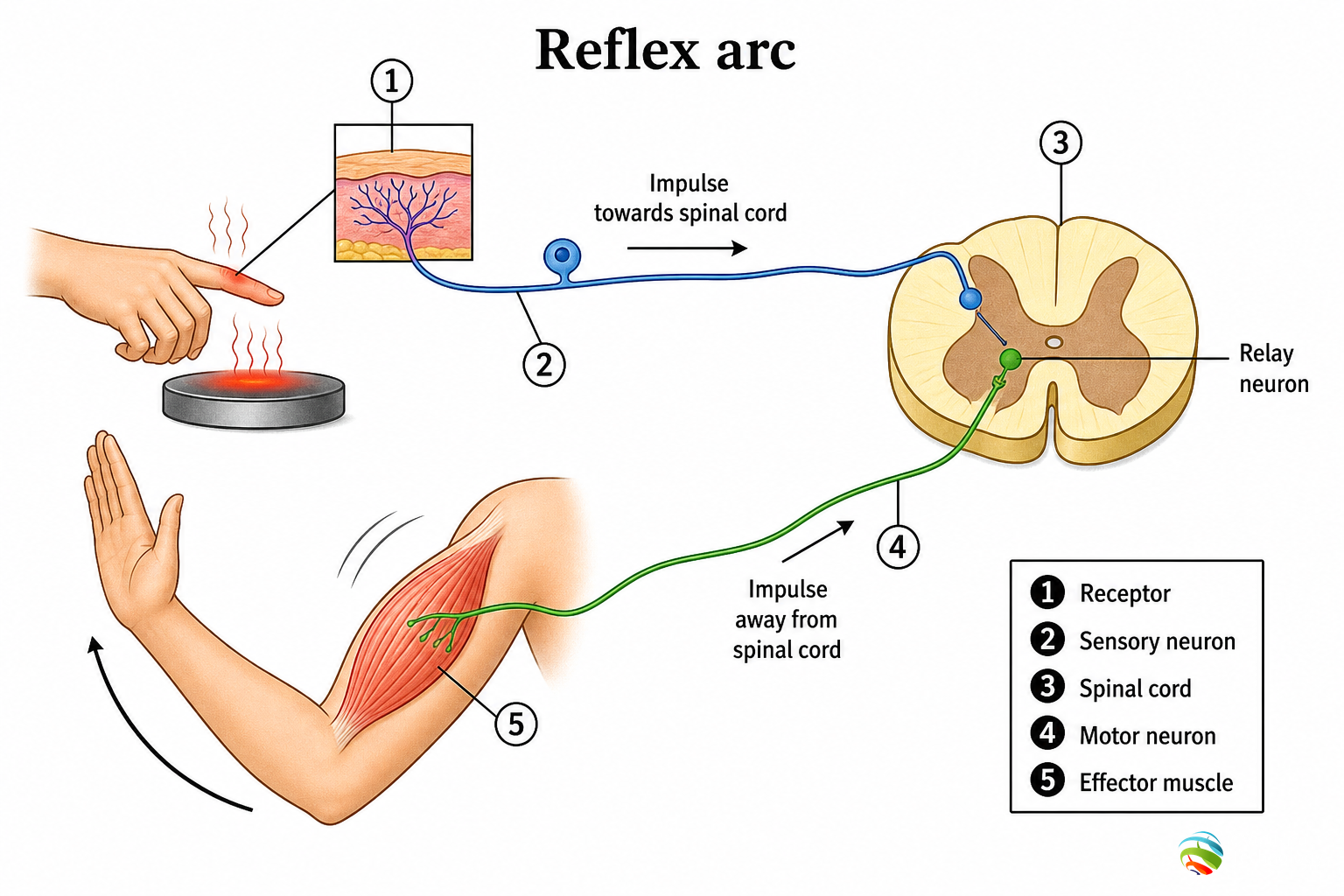

Step 2 — Diagram details for students
What this diagram shows
A reflex arc is the quick pathway for automatic responses to danger. The spinal cord relays the signal so action happens before the brain thoughtfully decides. Brain may still be informed, but speed comes from the short arc.
Numbered parts — mark & remember
Match each number on the figure with the meaning below. Say the function aloud once.
1 Receptor
Receptors detect the stimulus such as heat, pain, or pressure. They convert the stimulus into an electrical impulse. Without receptors, the reflex cannot start.
2 Sensory neuron
The sensory neuron carries the impulse from receptor toward the spinal cord. It is the inward pathway of the arc. In diagrams, show it entering the dorsal side conceptually at Class 10 level.
3 Spinal cord
The spinal cord provides a fast relay centre for the reflex. It connects sensory input to motor output without waiting for conscious decision. This is why reflexes are rapid and automatic.
4 Motor neuron
The motor neuron carries the command from spinal cord to the effector. It is the outward pathway of the arc. Damage here can stop the response even if sensation occurs.
5 Effector
Effectors are muscles or glands that carry out the response. Pulling the hand from a hot object is a muscle effector action. The response removes the body from harm quickly.
How to read this figure
- Read left to right as stimulus → response chain.
- Emphasise spinal cord, not brain, as the quick decision centre.
- Use the hot-object example in answers.
Redraw for board marks
- Draw five boxes connected by arrows in order.
- Label receptor to effector clearly.
- Write “spinal cord” in the centre box.
Board answer tip: Write the five-step sequence and illustrate with touching a hot object.
Exam tips — don’t lose marks
- Never write that the brain decides the reflex instantly.
- Mention that brain may receive information afterwards.
- Keep the sequence exact for full marks.