Phototropism in a shoot
Auxin accumulates on the shaded side → uneven growth → bend toward light.
Step 1 — Study the figure
Cover the label key on the image, name each numbered part, then check the explanations below.

Step 2 — Diagram details for students
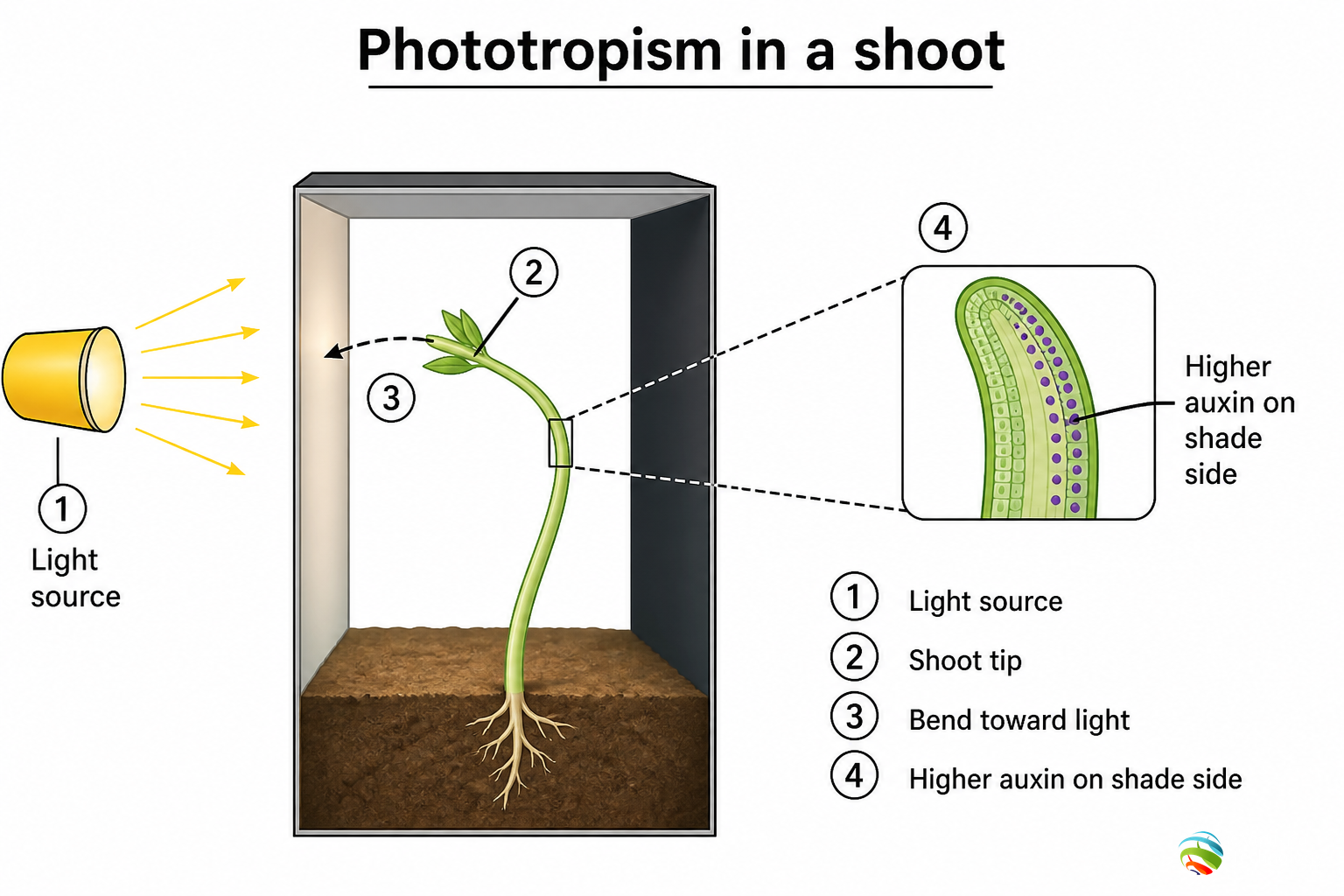
What this diagram shows
Phototropism is directional growth of a shoot toward light. Auxin accumulates on the shaded side, causing that side to elongate more, so the tip bends to the light. This is a growth movement, unlike quick Mimosa folding.
Numbered parts — mark & remember
Match each number on the figure with the meaning below. Say the function aloud once.
1 Light direction
Light is the directional stimulus for the shoot. The plant does not “walk”; it grows unequally toward the light. Always show the light source with an arrow in diagrams.
2 Shoot tip
The tip region is important for sensing and for auxin-related growth control. Cutting tips in classical experiments changes bending behaviour. Mark the tip clearly in board drawings.
3 Auxin on shady side
Auxin collects more on the side away from light. Higher auxin promotes cell elongation on that shaded side. Students often wrongly place auxin on the lit side — avoid that trap.
4 Bend toward light
Because the shady side grows longer, the shoot curves toward the light. The result is positive phototropism of the stem. Roots show different tropisms such as geotropism.
How to read this figure
- Stimulus → auxin redistribution → unequal growth → bending.
- Shade side elongates more, tip points to light.
- Tropism needs growth; Mimosa fold is not tropism.
Redraw for board marks
- Draw a vertical shoot with light from one side.
- Mark higher auxin on the shady side.
- Curve the tip toward the light and label the bend.
Board answer tip: Draw shoot + light + auxin on shade side, then explain unequal elongation in three sentences.
Exam tips — don’t lose marks
- Auxin is higher on the shaded side, not the illuminated side.
- Call it phototropism and name auxin when asked for hormone.
- Distinguish tropism from nastic/turgor movements.