Response decision map
Choose reflex, brain part, tropism, or hormone from the question.
Step 1 — Study the figure
Cover the label key on the image, name each numbered part, then check the explanations below.

Step 2 — Diagram details for students
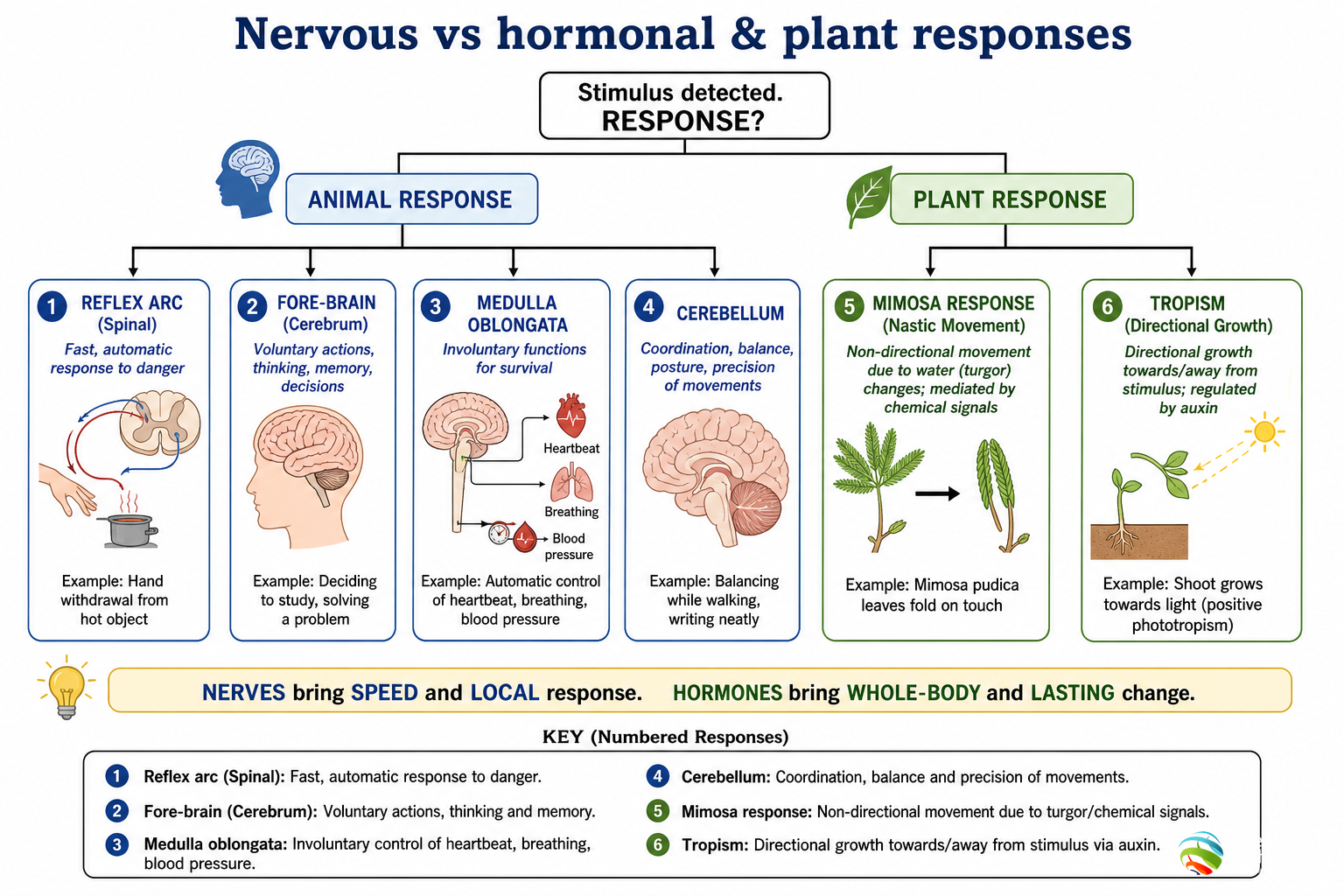
What this diagram shows
This decision map helps you choose the correct control system answer from question wording. Animal fast danger responses use reflexes; thinking uses fore-brain; vital involuntary acts use medulla; balance uses cerebellum. Plants use tropisms or turgor changes, while hormones give chemical whole-body control.
Numbered parts — mark & remember
Match each number on the figure with the meaning below. Say the function aloud once.
1 Reflex
Choose reflex when the situation is urgent, automatic, and protective. The pathway is receptor → spinal cord → effector. Do not credit the brain with instant decision-making here.
2 Fore-brain
Choose fore-brain for thinking, memory, sensory interpretation, and voluntary decisions. Writing an exam answer or choosing a path are fore-brain tasks. It is the centre of intelligence in Class 10 wording.
3 Medulla
Choose medulla for heartbeat, breathing, and blood pressure control. These continue without conscious effort. Mixing medulla with cerebellum is a common error.
4 Cerebellum
Choose cerebellum for posture, balance, and precise coordination of movement. Riding a bicycle examples often fit here. It refines movement rather than starting vital automatic rhythms.
5 Plant tropism
Choose tropism for directional growth responses such as phototropism. Name the hormone (often auxin) when asked. Quick Mimosa folding is not a tropism.
6 Hormones
Choose hormones when control is chemical, slower, widespread, and longer lasting. Blood carries hormones to target organs. Use gland + effect + deficiency format in answers.
How to read this figure
- Underline question keywords first: fast, think, heartbeat, balance, growth, chemical.
- Pick one branch, then write the detailed mechanism.
- Compare nerve vs hormone if the question asks for differences.
Redraw for board marks
- Draw Animal vs Plant branches.
- List the four animal options and two plant options.
- Add a nerves vs hormones comparison line at the bottom.
Board answer tip: In mixed questions, first state which system applies, then give the mechanism in 3–4 lines.
Exam tips — don’t lose marks
- Keyword matching prevents writing the wrong brain part.
- Always separate tropism from non-growth plant movements.
- Hormone answers need gland names, not only effects.