Endocrine glands
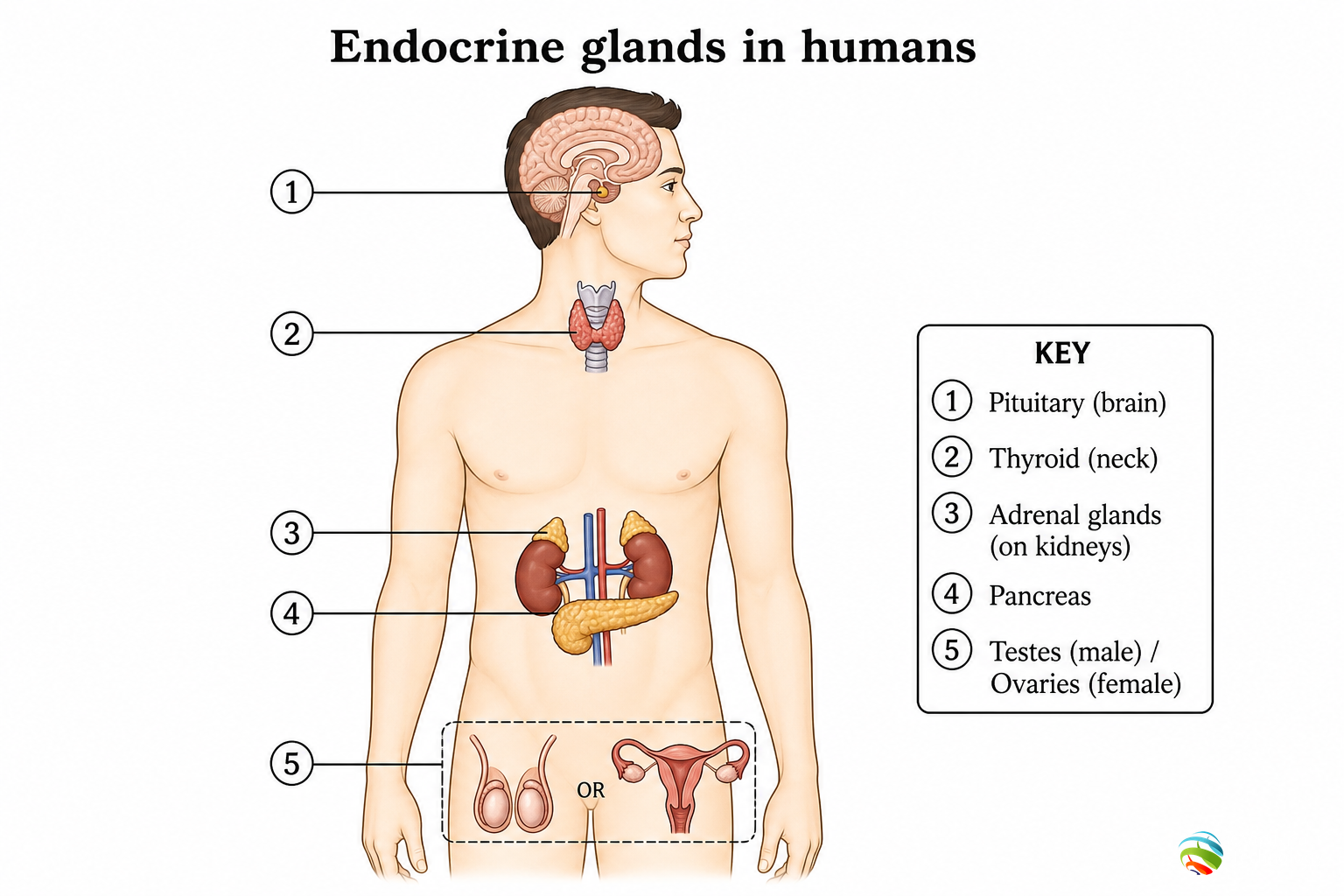
Pituitary, thyroid, adrenals, pancreas, gonads — positions for labelling.
Step 1 — Study the figure
Cover the label key on the image, name each numbered part, then check the explanations below.

Step 2 — Diagram details for students
What this diagram shows
Endocrine glands release hormones into blood for slower, widespread, and longer-lasting control. Each gland has a signature hormone and deficiency effect in Class 10. Feedback keeps hormone levels within useful limits.
Numbered parts — mark & remember
Match each number on the figure with the meaning below. Say the function aloud once.
1 Pituitary
The pituitary in the brain is often called a master gland because it controls other glands and releases growth hormone. Childhood GH deficiency can cause dwarfism. Hypothalamus influences pituitary through releasing hormones.
2 Thyroid
The thyroid in the neck secretes thyroxin, which regulates metabolism of carbohydrates, proteins, and fats for balanced growth. Thyroxin needs iodine in the diet. Iodine deficiency can cause goitre (swollen neck).
3 Adrenals
Adrenal glands on the kidneys secrete adrenaline in emergencies. Adrenaline raises heart rate and breathing and prepares muscles for action. Digestion is reduced during this fight-or-flight response.
4 Pancreas
The pancreas secretes insulin to lower/regulate blood sugar. Insulin lack leads to diabetes mellitus. This is a classic feedback example with rising and falling sugar levels.
5 Gonads
Testes secrete testosterone and ovaries secrete oestrogen. These hormones control puberty changes and help regulate gamete-related cycles. They act with the brain–pituitary axis for timing.
How to read this figure
- For each gland remember: location → hormone → effect → deficiency.
- Contrast hormones (slow, widespread) with nerves (fast, local).
- Feedback prevents continuous over-secretion.
Redraw for board marks
- Sketch a simple body outline.
- Mark the five gland positions.
- Write one hormone beside each gland.
Board answer tip: Make a gland–hormone–function–deficiency table from memory after studying this figure.
Exam tips — don’t lose marks
- Iodine–thyroxin–goitre is a must-link trio.
- Adrenaline answers should mention emergency preparation.
- Insulin answers should mention blood sugar and diabetes.