Step 1 — Study the figure
Cover the label key on the image, name each numbered part, then check the explanations below.

Step 2 — Diagram details for students
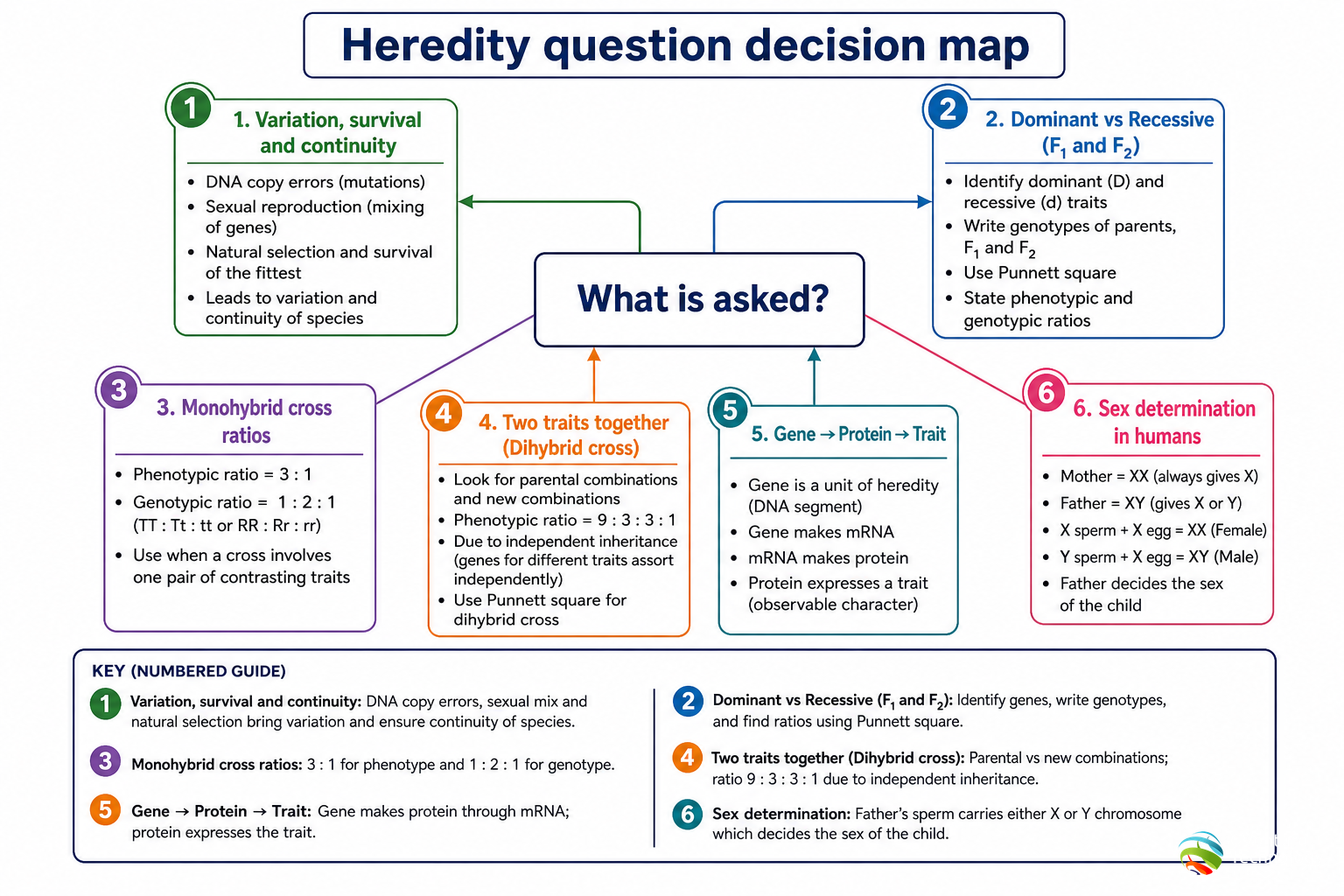
What this diagram shows
This map tells you which heredity tool to use from the question. Variation, dominance, ratios, independent inheritance, gene–protein link, and sex determination are different answer tracks. Choosing the wrong track wastes time and marks.
Numbered parts — mark & remember
Match each number on the figure with the meaning below. Say the function aloud once.
1 Variation
Use this track for questions on why offspring differ and how diversity helps survival. Include DNA copy errors, sexual mixing, and environmental selection. Keep evolution language at NCERT Class 10 depth.
2 Dominant/recessive
Use this when contrasting traits and F1/F2 appearance are discussed. Dominant shows in F1; recessive returns in F2. Give allele symbols whenever possible.
3 Ratios
Use monohybrid ratios for one-trait numerical reasoning: phenotype ~3:1 and genotype ~1:2:1. Punnett squares support the working. Do not mix phenotype and genotype ratio labels.
4 Two traits
For dihybrid-style questions, carefully separate parental combinations from new combinations. New combinations support independent inheritance. Read the given parental pairing before writing answers.
5 Gene → protein
A gene is a DNA segment that codes for a protein; proteins/enzymes lead to traits. Use this for “how is a trait produced” questions. It connects molecular idea to visible character.
6 Sex
Use XX/XY logic and state that father determines sex. This track is separate from Mendel pea ratios. Keep chromosome diagrams ready.
How to read this figure
- Underline what is asked before writing Mendel stories automatically.
- Pick one branch and stay consistent.
- For two-trait questions, verify parental vs new labels twice.
Redraw for board marks
- Draw a central “What is asked?” box.
- Add six outgoing branches with short cues.
- Star the branch that matches your current homework question.
Board answer tip: Rewrite the question as one of the six tracks, then answer only that track fully.
Exam tips — don’t lose marks
- Wrong parental/new assignment is a frequent dihybrid trap.
- Tt is tall, not medium.
- Sex determination answers must mention father’s sperm.