Step 1 — Study the figure
Cover the label key on the image, name each numbered part, then check the explanations below.

Step 2 — Diagram details for students
What this diagram shows
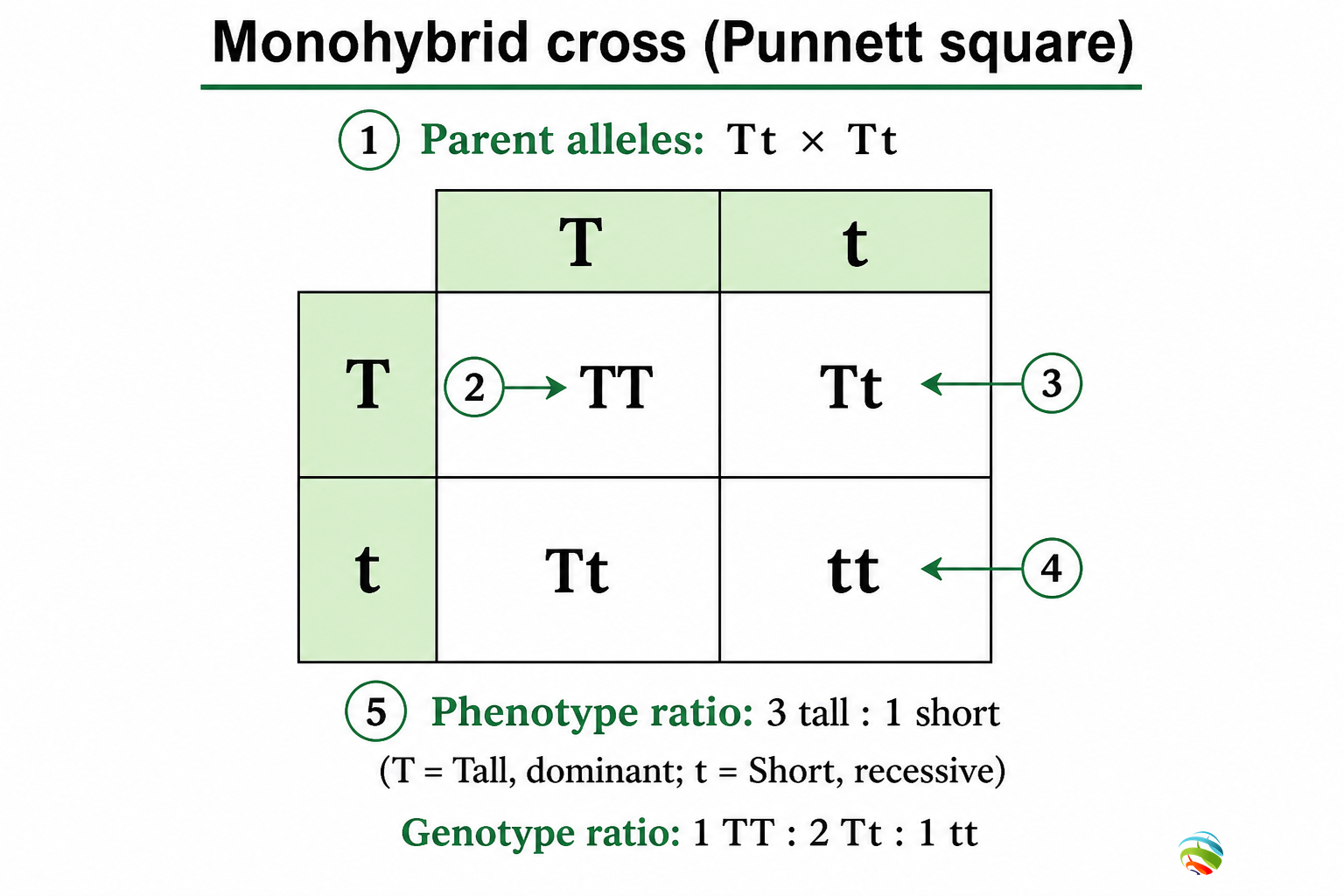
A Punnett square for Tt × Tt shows how random gamete combination produces the monohybrid ratio. It makes genotype and phenotype link visible in four equally likely boxes. This is the working tool for Mendel numerical-style questions.
Numbered parts — mark & remember
Match each number on the figure with the meaning below. Say the function aloud once.
1 Gametes T / t
Each heterozygous parent produces gametes carrying either T or t. Both gametes are equally likely in the basic model. Place parental gametes on the square edges.
2 TT box
TT is homozygous tall. It shows the dominant phenotype and breeds true for tall if selfed. One of the four Punnett boxes is TT.
3 Tt boxes
Tt is heterozygous tall. Phenotype is tall, but it carries a hidden recessive allele. Two of the four boxes are usually Tt.
4 tt box
tt is homozygous short and expresses the recessive trait. This explains why short returns in F2. One of four boxes is tt, giving phenotype 3 tall : 1 short overall.
How to read this figure
- Edges = gametes; inside = offspring genotypes.
- Count tall vs short phenotypes from the four boxes.
- State both ratios when the question asks for genotype and phenotype.
Redraw for board marks
- Draw a 2×2 grid.
- Label T and t on top and side.
- Fill TT, Tt, Tt, tt and write 3:1 beside it.
Board answer tip: Draw Punnett square, list genotypes, then conclude phenotype 3:1 and genotype 1:2:1.
Exam tips — don’t lose marks
- Show the square for method marks even if you know the ratio.
- Define genotype vs phenotype in one line each.
- Heterozygous is not “mixed appearance” for Mendel pea height.