Step 1 — Study the figure
Cover the label key on the image, name each numbered part, then check the explanations below.

Step 2 — Diagram details for students
What this diagram shows
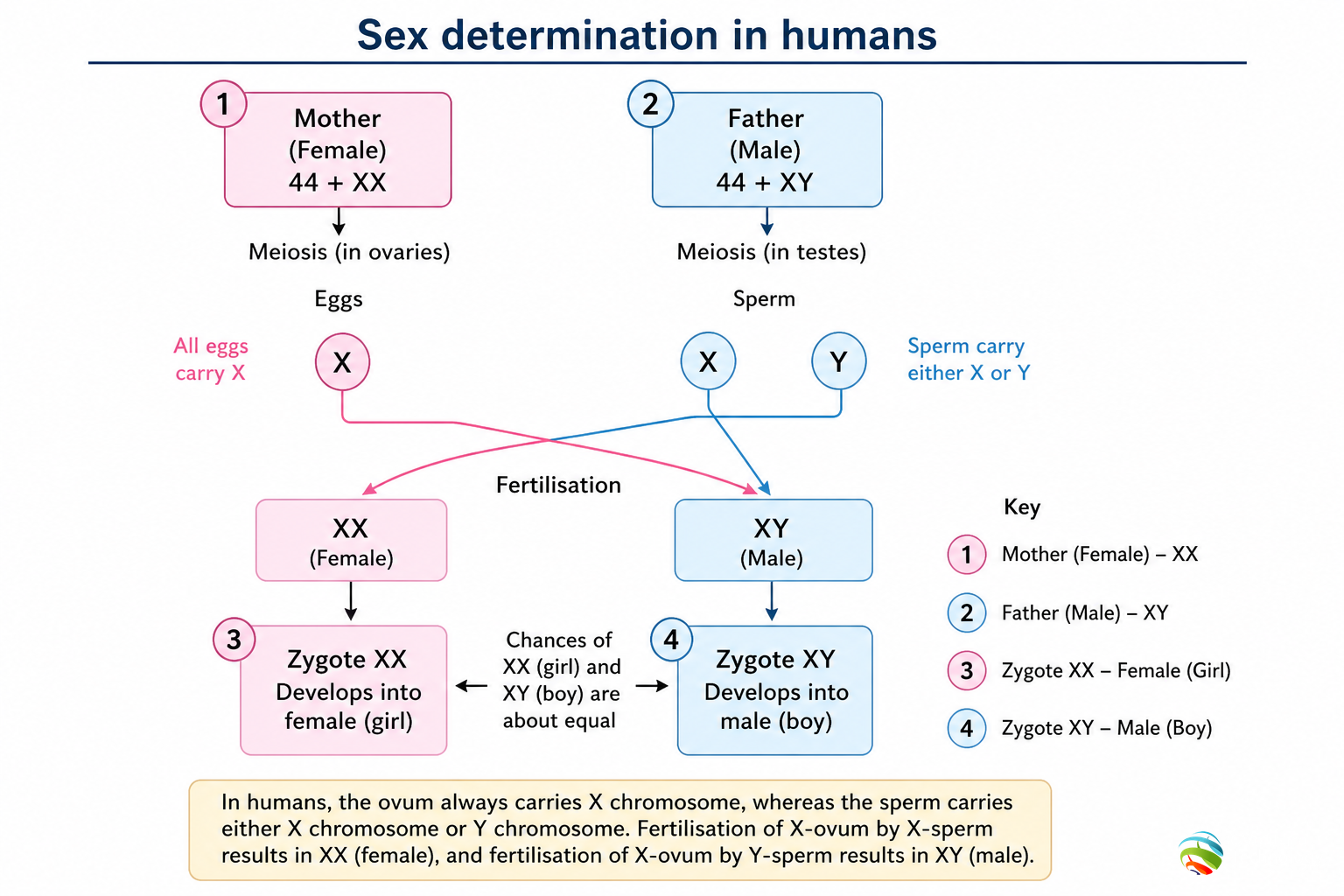
Human sex determination uses XX (female) and XY (male) chromosomes. Mother’s eggs always carry X, while father’s sperm carry X or Y. Therefore the father’s gamete decides the sex of the child, with roughly equal chance of girl or boy.
Numbered parts — mark & remember
Match each number on the figure with the meaning below. Say the function aloud once.
1 Mother XX
Human females have two X chromosomes in body cells. All eggs produced after meiosis carry one X. Mother therefore does not determine sex by providing X or Y choice.
2 Father XY
Human males have one X and one Y chromosome. After meiosis, half the sperm are expected to carry X and half Y. This is why father determines sex of the child.
3 XX zygote
If an X sperm fertilises the egg, zygote is XX and develops as a girl. Both parents contributed X. Probability is about half in the basic model.
4 XY zygote
If a Y sperm fertilises the egg, zygote is XY and develops as a boy. The Y comes only from the father. Probability is also about half.
How to read this figure
- Egg always X; sperm X or Y.
- XX girl, XY boy.
- Father’s sperm decides sex.
Redraw for board marks
- Show mother XX and father XY.
- Draw gametes and two fertilisation outcomes.
- Label XX and XY results with girl/boy.
Board answer tip: Draw XX/XY diagram and write one sentence: father’s sperm determines sex of child.
Exam tips — don’t lose marks
- Never write that mother determines sex.
- Sex is decided at fertilisation.
- Use chromosome diagrams for clarity in 3-mark answers.