Binary fission in Amoeba
Nucleus divides, then cytoplasm — two daughter cells.
Step 1 — Study the figure
Cover the label key on the image, name each numbered part, then check the explanations below.

Step 2 — Diagram details for students
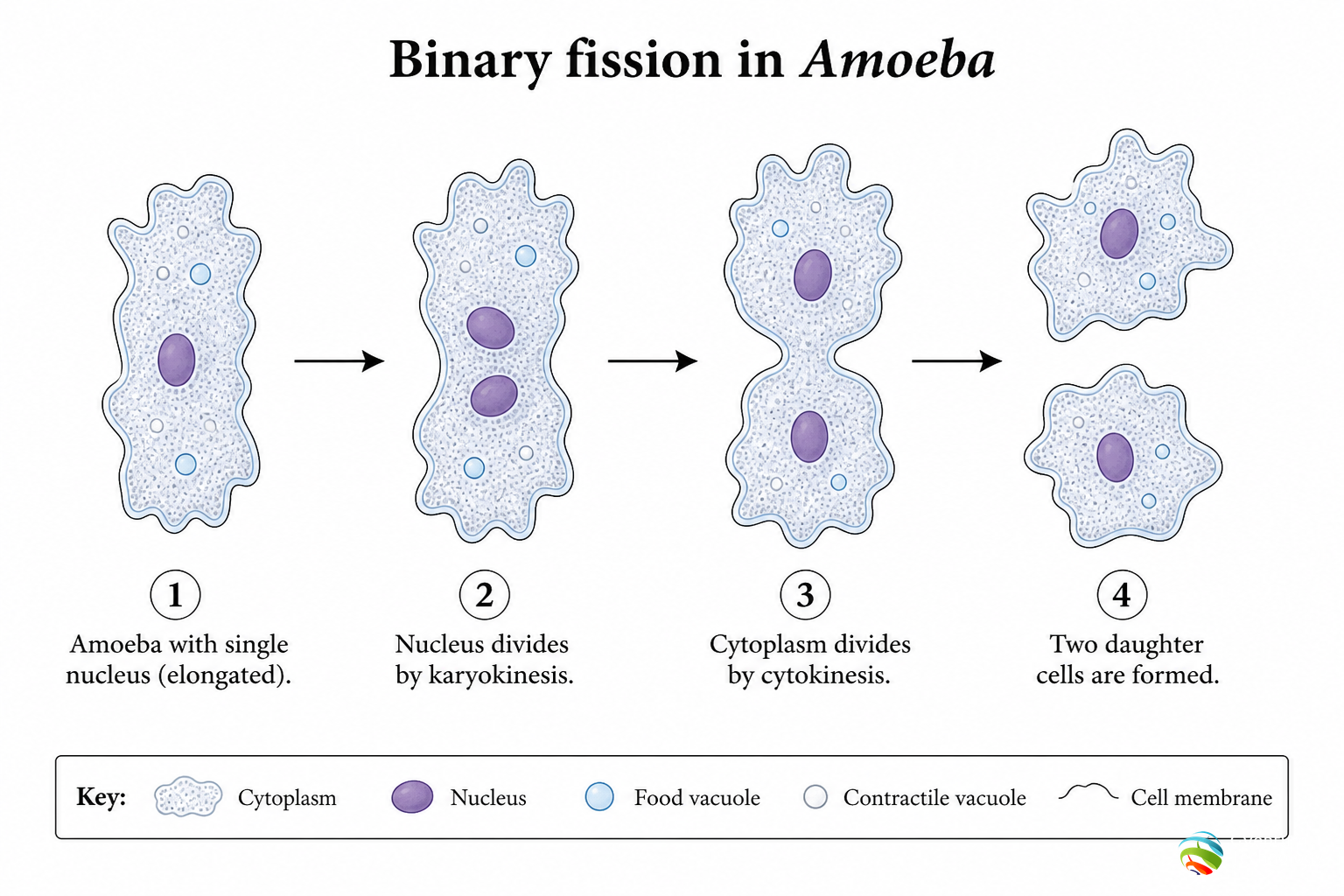
What this diagram shows
Binary fission in Amoeba is a four-stage asexual split into two daughters. The nucleus divides first, then cytoplasm divides. It is the simplest illustration of unicellular asexual reproduction in Class 10.
Numbered parts — mark & remember
Match each number on the figure with the meaning below. Say the function aloud once.
1 Elongated cell
The Amoeba cell elongates as it prepares to divide. This shape change is the first visible stage in many textbook sequences. DNA has already been copied so each daughter can get a full set.
2 Nucleus divides
Nuclear division comes before the cell splits fully. Each future daughter needs nuclear material. Skipping this order in descriptions loses method marks.
3 Cytoplasm divides
After nuclear division, cytoplasm divides to separate cell contents. Two forming cells become distinct. This completes partitioning of the parent body.
4 Two daughters
Two new individuals are produced, each able to grow and repeat the cycle. Variation is limited compared with sexual reproduction. Multiple fission differs by forming many daughters at once.
How to read this figure
- Read the stages left to right in order.
- Nucleus first, cytoplasm next, then two cells.
- Compare with budding and multiple fission when asked.
Redraw for board marks
- Draw four panels in sequence.
- Number each stage.
- Show nucleus clearly in early panels.
Board answer tip: Draw four numbered stages and write one sentence under each stage.
Exam tips — don’t lose marks
- Yeast budding is not binary fission.
- Leishmania shows oriented binary fission relative to its whip-like structure.
- Plasmodium is multiple fission, not binary.