Longitudinal section of a flower
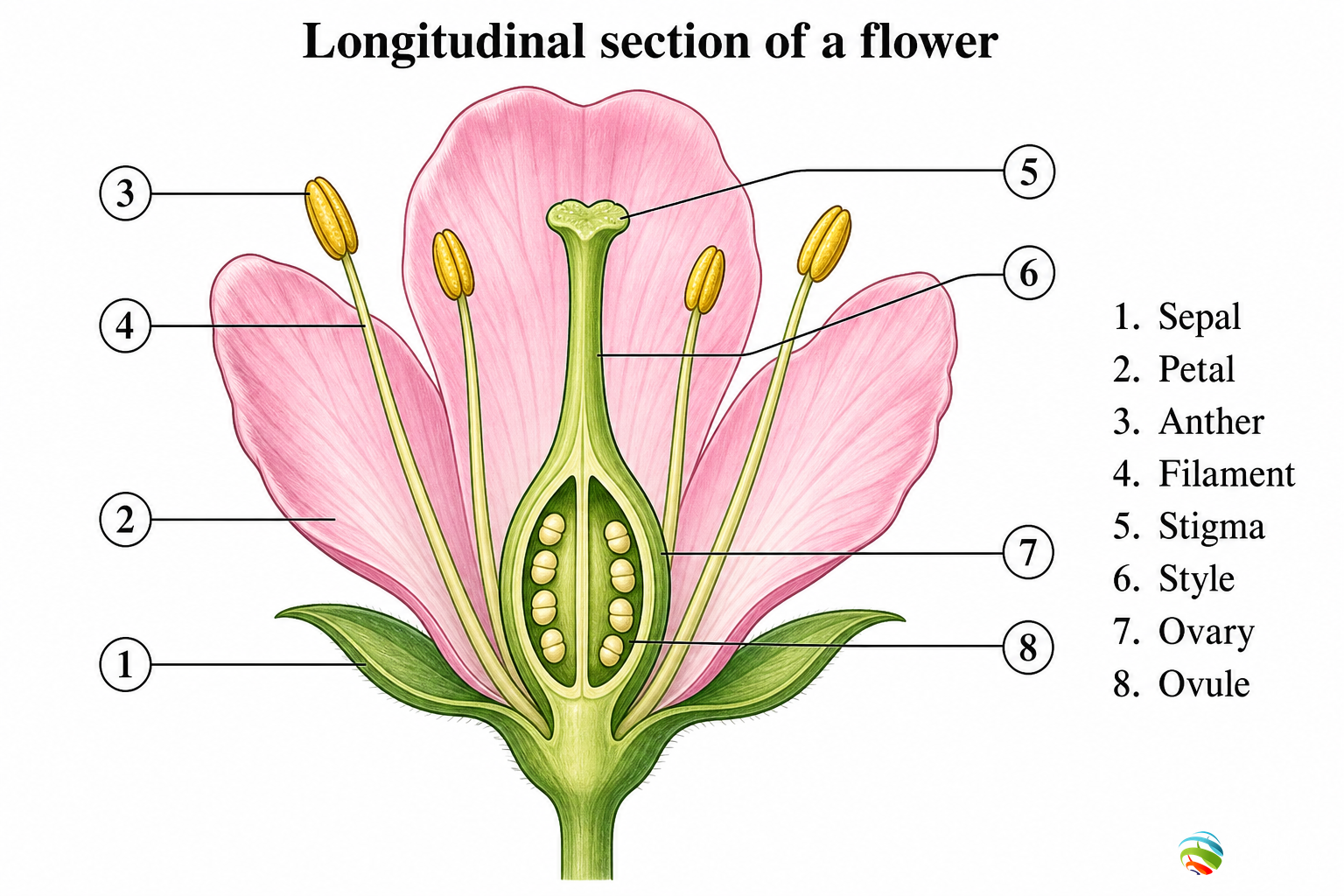
Sepal, petal, stamen (anther, filament), pistil (stigma, style, ovary, ovule).
Step 1 — Study the figure
Cover the label key on the image, name each numbered part, then check the explanations below.

Step 2 — Diagram details for students
What this diagram shows
A flower’s longitudinal section shows male and female reproductive parts used in sexual reproduction of flowering plants. Stamens produce pollen; the pistil receives pollen and contains ovules. After fertilisation, ovule becomes seed and ovary becomes fruit.
Numbered parts — mark & remember
Match each number on the figure with the meaning below. Say the function aloud once.
1 Sepal
Sepals are the outermost leaf-like parts that protect the flower in bud stage. They are usually green. Together they form the calyx.
2 Petal
Petals are often colourful and attract pollinators. They help successful pollen transfer in many plants. Together they form the corolla.
3 Anther / filament
The stamen is the male part: anther plus filament. The anther produces pollen grains containing male gametes. Filament holds the anther in position.
4 Stigma / style / ovary
The pistil is the female part: stigma, style, and ovary. Stigma receives pollen; style is the tube pathway; ovary contains ovules. Fertilisation in the ovule leads to seed formation.
How to read this figure
- Outer whorls protect/attract; inner whorls are reproductive.
- Stamen = male; pistil = female.
- Remember seed/fruit conversion after fertilisation.
Redraw for board marks
- Draw central pistil and surrounding stamens.
- Add petals and sepals outside.
- Leader-line labels for anther, stigma, ovary, ovule.
Board answer tip: Draw LS of flower with eight labels and write male/female parts separately in the key.
Exam tips — don’t lose marks
- Unisexual flowers have either stamens or pistil; bisexual have both.
- Pollination is pollen transfer; fertilisation is gamete fusion.
- Ovary → fruit; ovule → seed.