Human female reproductive system
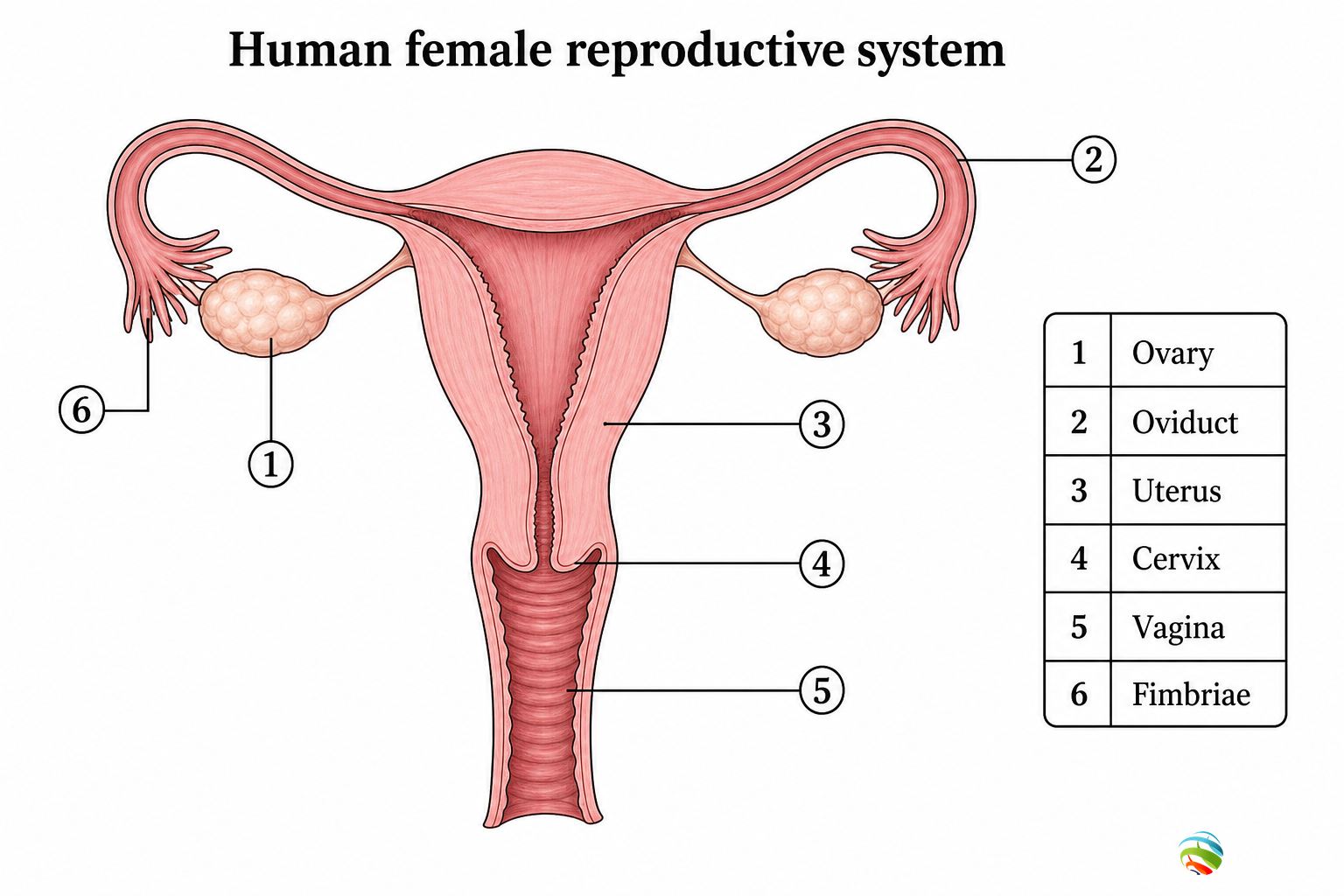
Ovary, oviduct, uterus, cervix, vagina — outline for board labelling.
Step 1 — Study the figure
Cover the label key on the image, name each numbered part, then check the explanations below.

Step 2 — Diagram details for students
What this diagram shows
The female system produces eggs, provides the site of fertilisation, and supports embryo development. Fertilisation usually occurs in the oviduct, while the uterus nurtures the embryo with placental exchange. If fertilisation does not occur, menstruation follows.
Numbered parts — mark & remember
Match each number on the figure with the meaning below. Say the function aloud once.
1 Ovary
Ovaries produce ova (eggs) and female hormones such as oestrogen. Hormones regulate puberty features and the menstrual cycle. One egg is usually released in a cycle (ovulation).
2 Oviduct
The oviduct (fallopian tube) is the usual site of fertilisation. Sperm meets egg here to form a zygote. Writing fertilisation in the uterus is a common mistake.
3 Uterus
The uterus is where the embryo implants and develops. The placenta forms for exchange of nutrients, gases, and wastes with the mother. Thick uterine lining is central to pregnancy and menstruation.
4 Cervix / vagina
The cervix is the opening of the uterus into the vagina. The vagina is the birth canal and also the route for menstrual flow. These parts complete the pathway from uterus to exterior.
How to read this figure
- Egg path: ovary → oviduct → uterus.
- Fertilisation in oviduct; development in uterus.
- No fertilisation → menstruation.
Redraw for board marks
- Draw paired ovaries and oviducts leading to uterus.
- Label cervix and vagina below.
- Add a note “fertilisation in oviduct” beside the tube.
Board answer tip: Label the five parts and write fertilisation site, implantation site, and placenta role in three lines.
Exam tips — don’t lose marks
- Fertilisation site is oviduct, not uterus.
- Placenta is the exchange organ between mother and foetus.
- Copper-T prevents pregnancy but does not protect from STDs.