Pollen tube path
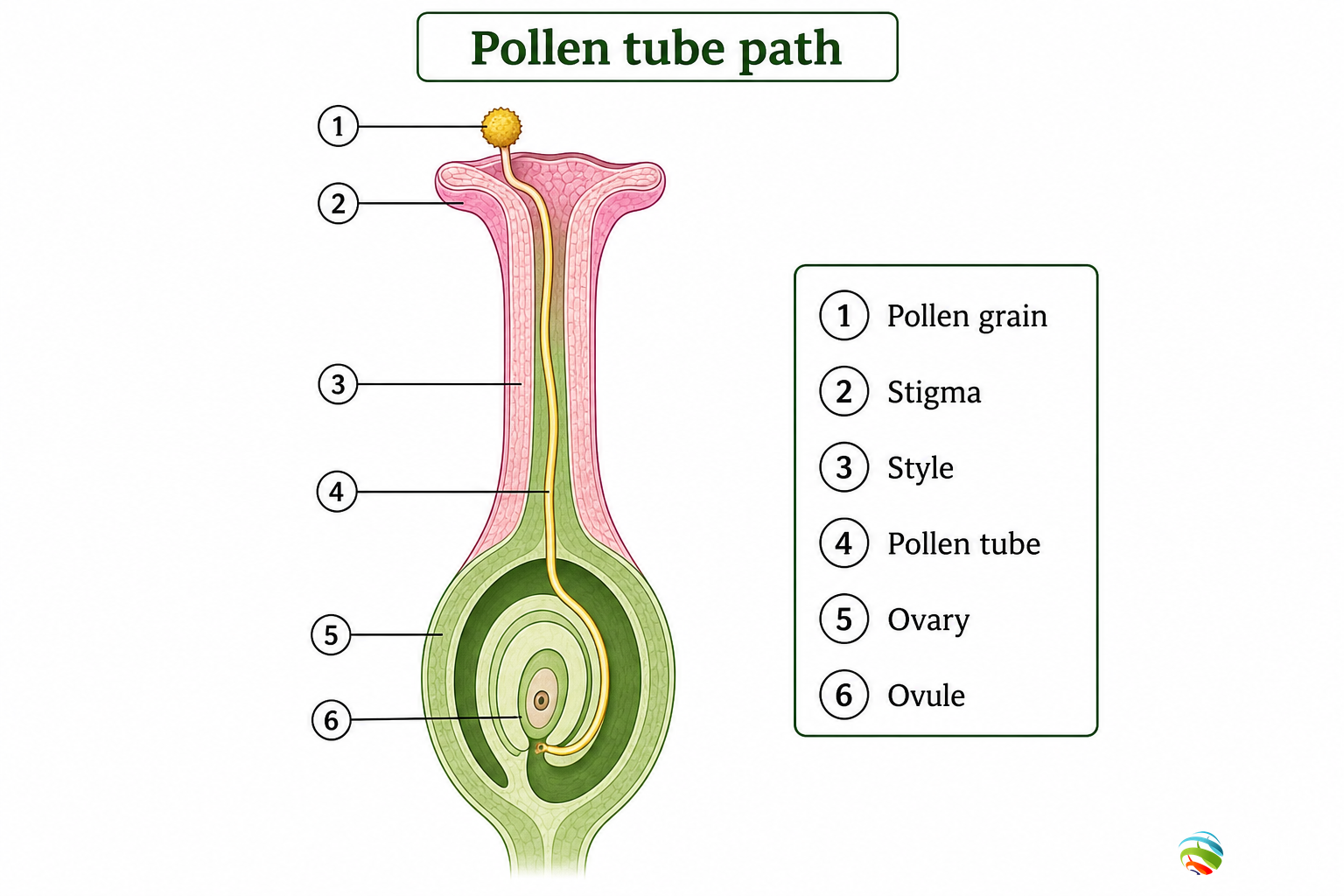
Pollen on stigma → tube through style → ovule (fertilisation).
Step 1 — Study the figure
Cover the label key on the image, name each numbered part, then check the explanations below.

Step 2 — Diagram details for students
What this diagram shows
After pollination, a pollen tube grows from stigma through style to the ovule. This delivers the male gamete for fertilisation. The figure separates pollination from fertilisation, a frequent exam distinction.
Numbered parts — mark & remember
Match each number on the figure with the meaning below. Say the function aloud once.
1 Pollen on stigma
Pollination is complete when pollen lands on a compatible stigma. Pollen germinates there under suitable conditions. Without successful pollination, the tube path cannot begin.
2 Pollen tube
The pollen tube grows down through the style tissue. It carries the male gamete toward the ovule. Show this as a continuous tube in diagrams.
3 Ovule
The ovule in the ovary is where fertilisation occurs. Male and female gametes fuse to form a zygote. The ovule later develops into a seed.
4 Ovary outcome
After fertilisation the ovary develops into fruit. Fruit protects seeds and may help dispersal. This conversion is a standard one-line board fact.
How to read this figure
- Sequence: pollination → tube growth → fertilisation → seed/fruit.
- Do not call pollen landing fertilisation.
- Tube path is stigma → style → ovule.
Redraw for board marks
- Draw pistil outline with stigma, style, ovary.
- Place pollen on stigma and tube into ovule.
- Label each part with leader lines.
Board answer tip: Draw pollen-tube path and write two sentences distinguishing pollination and fertilisation.
Exam tips — don’t lose marks
- Pollination ≠ fertilisation — write both definitions if asked to distinguish.
- Self and cross pollination differ by pollen source.
- Keep double fertilisation detail only at NCERT depth required.