Alveoli and gas exchange
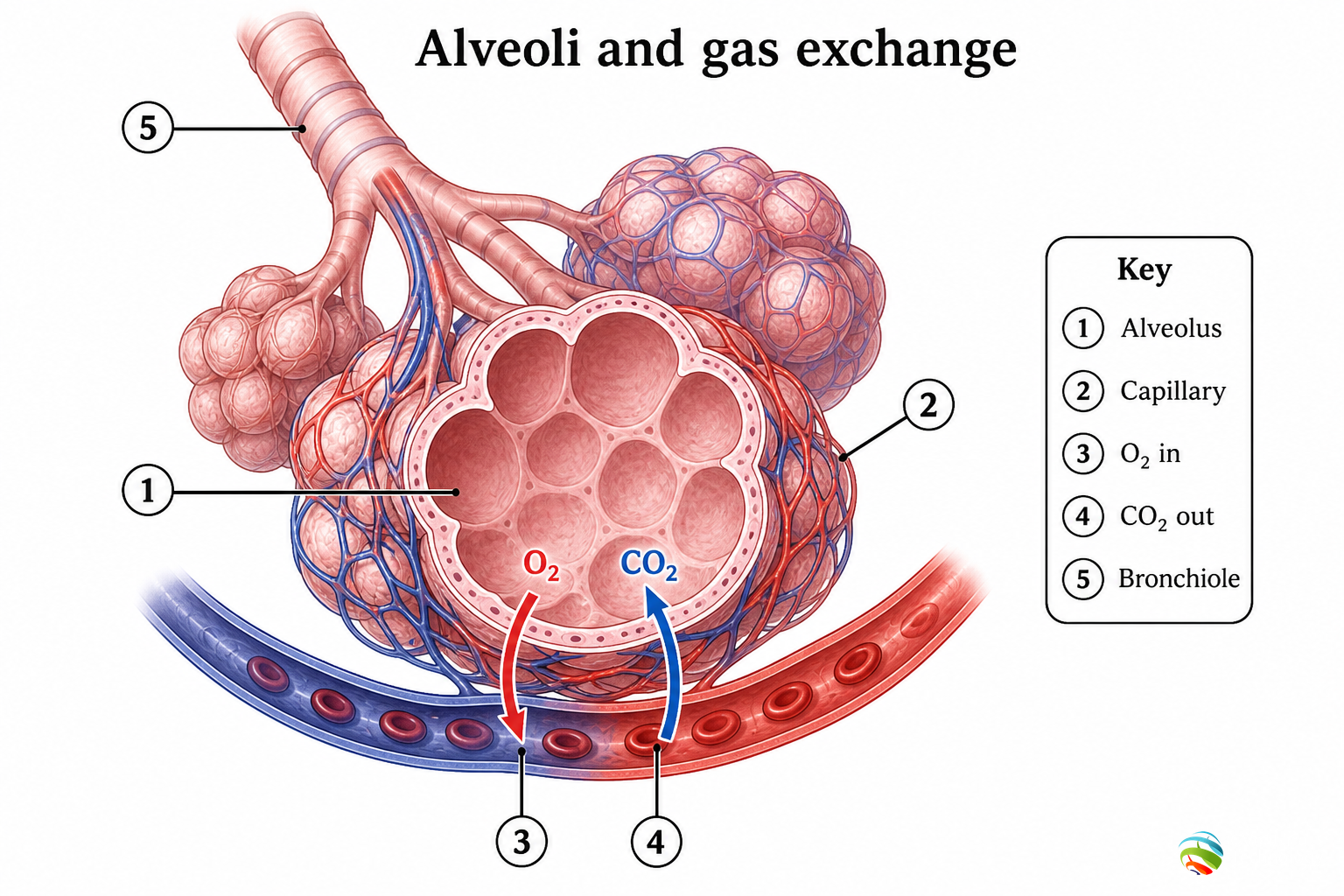
Thin-walled sacs surrounded by capillaries — O₂ in, CO₂ out.
Step 1 — Study the figure
Cover the label key on the image, name each numbered part, then check the explanations below.

Step 2 — Diagram details for students
What this diagram shows
Alveoli are thin-walled air sacs where oxygen enters blood and carbon dioxide leaves. Their design gives huge surface area, a thin barrier, and rich blood supply. This figure is central to breathing and gas-exchange questions.
Numbered parts — mark & remember
Match each number on the figure with the meaning below. Say the function aloud once.
1 Alveolus
An alveolus is a balloon-like sac with a very thin wall. Millions of alveoli together create an enormous surface for diffusion. Residual air in lungs helps exchange continue between breaths.
2 Capillary network
A dense net of capillaries surrounds each alveolus. Blood comes close to air so gases can diffuse quickly. Without rich blood flow, exchange would be too slow for body needs.
3 O₂ into blood
Oxygen diffuses from alveolar air into blood. Most oxygen then binds to haemoglobin in red blood cells. This oxygenated blood returns to the heart for transport to the body.
4 CO₂ out
Carbon dioxide diffuses from blood into alveolar air to be exhaled. Keeping this removal efficient prevents harmful CO₂ build-up. Show opposite arrows for O₂ and CO₂ in diagrams.
How to read this figure
- Focus on why alveoli are efficient: area, thin wall, blood supply.
- Direction matters: O₂ in, CO₂ out.
- Separate breathing (air movement) from respiration (energy release).
Redraw for board marks
- Draw grape-like alveoli with surrounding capillaries.
- Add clear O₂ and CO₂ arrows.
- Label alveolus, capillary, and gas directions.
Board answer tip: Draw alveoli with capillaries and opposite gas arrows; write three reasons why exchange is efficient.
Exam tips — don’t lose marks
- Aquatic animals breathe faster because dissolved oxygen in water is low.
- Do not confuse alveoli with bronchioles.
- Mention haemoglobin when asked how oxygen is carried.