Human heart and double circulation
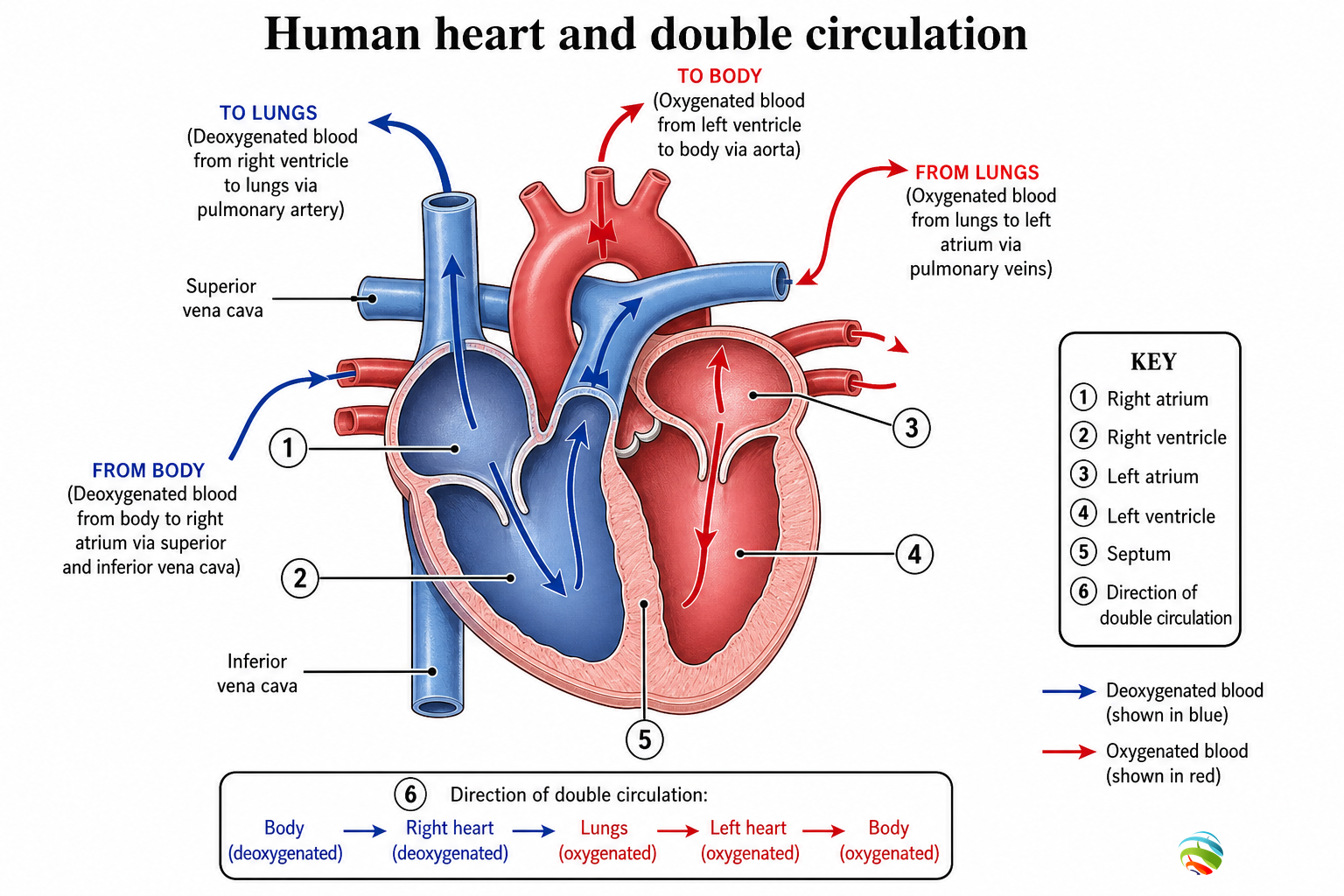
Body → right heart → lungs → left heart → body.
Step 1 — Study the figure
Cover the label key on the image, name each numbered part, then check the explanations below.

Step 2 — Diagram details for students
What this diagram shows
Double circulation means blood passes through the heart twice in one complete body circuit. Deoxygenated blood goes to the lungs, then oxygenated blood returns and is pumped to the body. The septum keeps the two streams separate for efficient oxygen supply.
Numbered parts — mark & remember
Match each number on the figure with the meaning below. Say the function aloud once.
1 Right atrium / ventricle
Deoxygenated blood from the body enters the right atrium and then the right ventricle. The right ventricle pumps it to the lungs through the pulmonary artery. Right side handles deoxygenated blood.
2 Lungs
In the lungs, blood releases carbon dioxide and picks up oxygen. This pulmonary circuit is one half of double circulation. Oxygenated blood then returns via pulmonary veins.
3 Left atrium / ventricle
Oxygenated blood enters the left atrium and then the left ventricle. The strong left ventricle pumps blood to the whole body through the aorta. Left side handles oxygenated blood.
4 Septum
The septum is the wall separating left and right sides of the heart. It prevents mixing of oxygenated and deoxygenated blood. This separation supports high energy needs of warm-blooded animals.
5 Double circulation path
Full path: body → right heart → lungs → left heart → body. Blood therefore goes through the heart twice per cycle. Arteries carry blood away from the heart; veins carry blood toward the heart.
How to read this figure
- Trace arrows carefully; do not swap left and right oxygen status.
- Pulmonary circuit = heart–lungs–heart; systemic = heart–body–heart.
- Valves prevent backflow — mention if the question asks about one-way flow.
Redraw for board marks
- Draw four chambers with a central septum.
- Add arrows for both circuits in different colours if possible.
- Label lungs and body ends of the loops.
Board answer tip: Draw the heart with double-circulation arrows and write the path in one sequenced sentence.
Exam tips — don’t lose marks
- Left side is oxygenated; right side is deoxygenated.
- Pulmonary artery carries deoxygenated blood — a common trap.
- Systolic/diastolic values are about 120/80 mm Hg in resting adults (NCERT idea).