Human digestive system
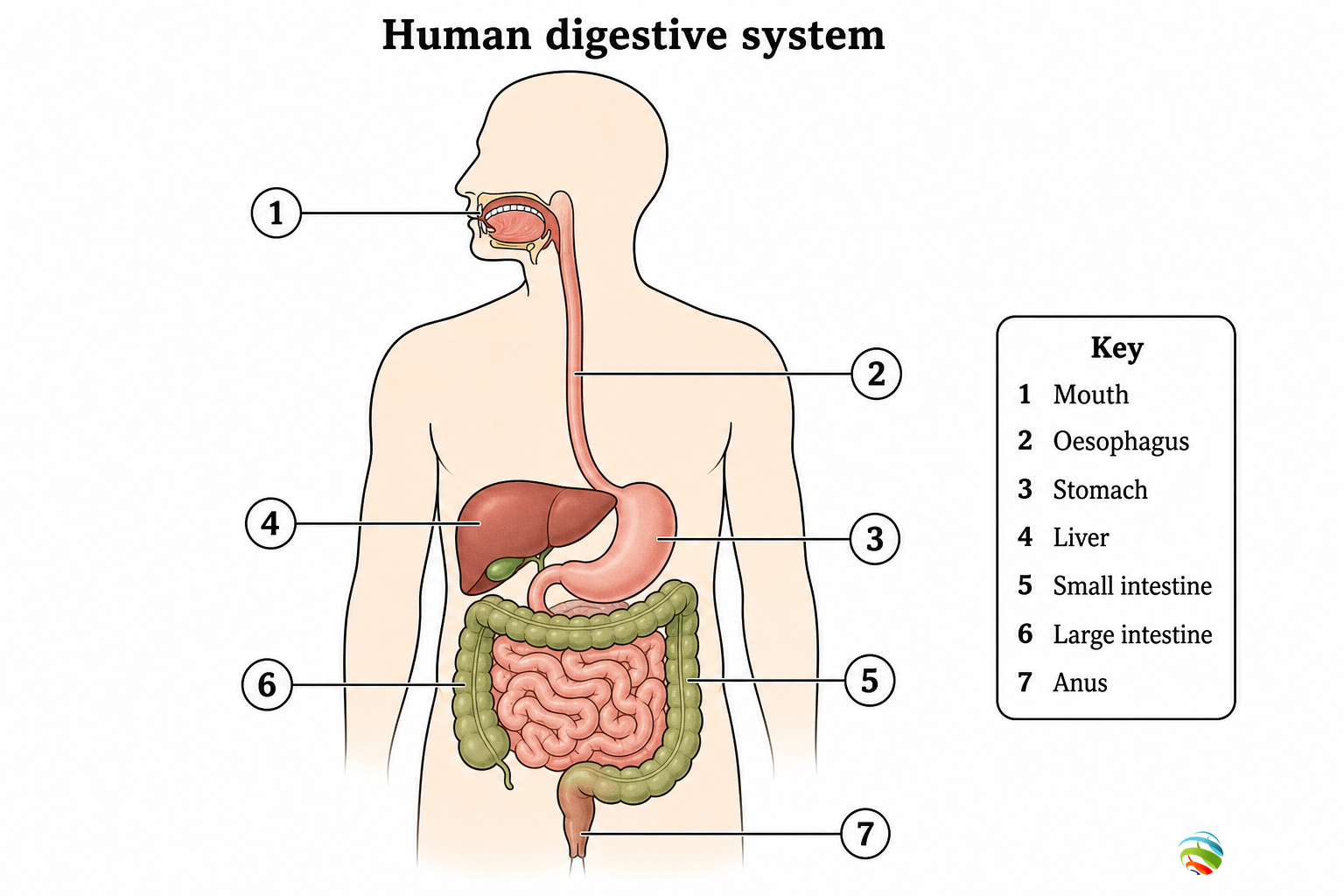
Mouth to anus pathway with major organs labelled.
Step 1 — Study the figure
Cover the label key on the image, name each numbered part, then check the explanations below.

Step 2 — Diagram details for students
What this diagram shows
The human digestive system breaks complex food into absorbable forms and absorbs them mainly in the small intestine. Different organs contribute enzymes or juices at specific stages. Board answers should follow the path mouth → stomach → small intestine and state enzyme actions correctly.
Numbered parts — mark & remember
Match each number on the figure with the meaning below. Say the function aloud once.
1 Mouth
Digestion begins in the mouth with chewing and salivary amylase. Starch starts changing to sugar here. Mucus in saliva also helps food form a bolus for swallowing.
2 Stomach
The stomach churns food and secretes gastric juice containing pepsin and HCl. Pepsin starts protein digestion in acidic medium. Mucus is essential to protect the stomach wall from acid.
3 Liver / bile
The liver produces bile, stored in the gall bladder and released into the small intestine. Bile salts emulsify fats into smaller globules. Bile does not digest fat itself — lipase does.
4 Pancreas
The pancreas pours enzymes such as trypsin and lipase into the small intestine. These continue protein and fat digestion. Pancreatic juice is crucial for completing digestion.
5 Small intestine
Most digestion is completed here and absorption occurs through villi. Villi increase surface area so digested food enters blood quickly. This is the key absorption organ in humans.
6 Large intestine / anus
The large intestine absorbs water from undigested waste. Remaining faeces are egested through the anus. Egestion is not excretion of metabolic wastes.
How to read this figure
- Follow the tube pathway and add gland contributions at the right place.
- Match enzyme to substrate: amylase–starch, pepsin–protein, lipase–fat.
- Keep emulsification (bile) separate from digestion (lipase).
Redraw for board marks
- Outline the gut from mouth to anus.
- Add liver and pancreas as side glands.
- Mark villi note at the small intestine.
Board answer tip: Draw the alimentary canal with glands, then write enzyme–substrate pairs for mouth, stomach, and small intestine.
Exam tips — don’t lose marks
- Common trap: writing that bile digests fats.
- List stomach secretions as pepsin, HCl, and mucus together.
- Absorption answer must mention villi.