Glucose pathways
Glucose → pyruvate in cytoplasm → aerobic (mitochondria) or anaerobic paths.
Step 1 — Study the figure
Cover the label key on the image, name each numbered part, then check the explanations below.

Step 2 — Diagram details for students
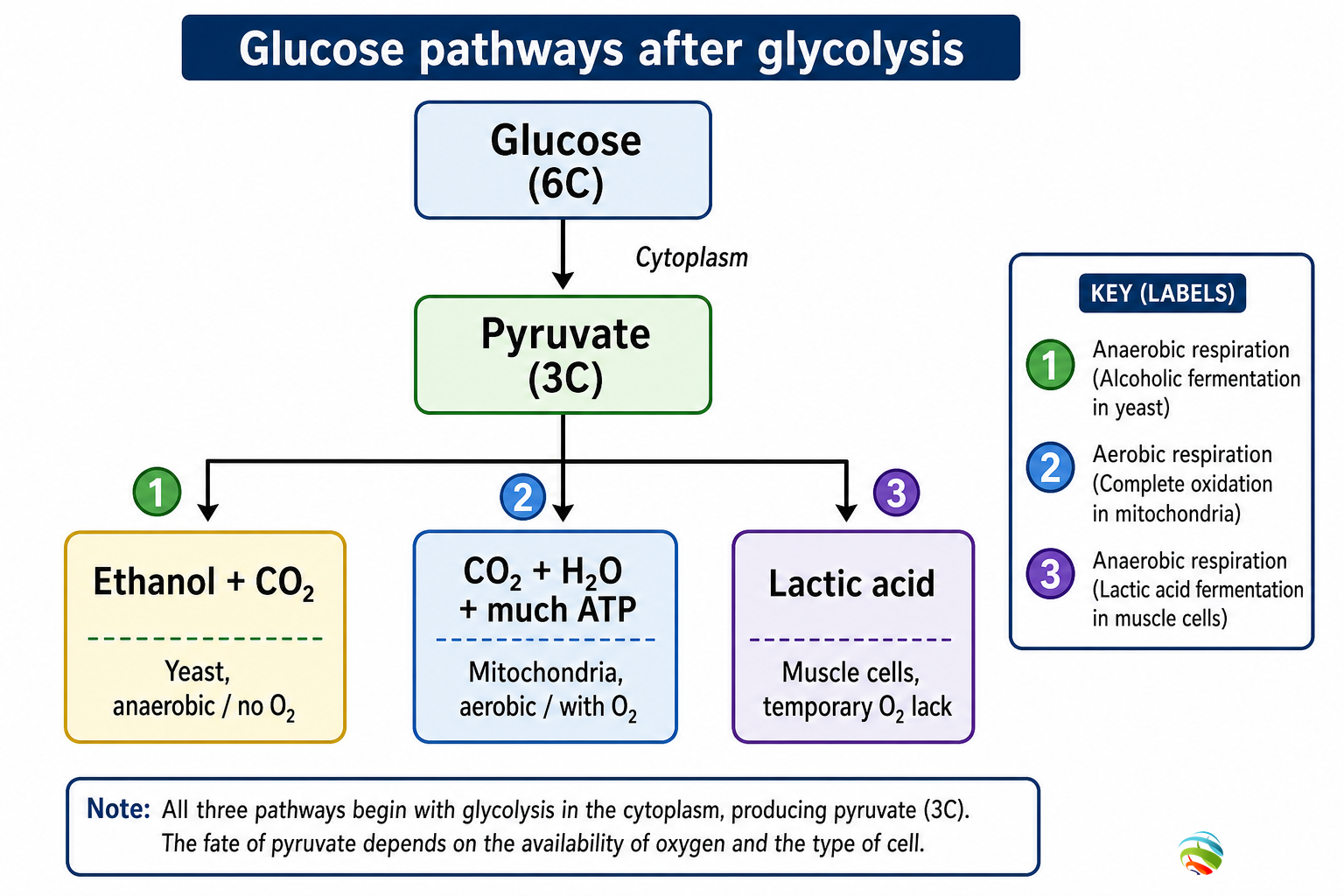
What this diagram shows
Glucose breakdown always starts with pyruvate formation in the cytoplasm. After that, the path depends on oxygen availability and the organism. Board answers must state the site, products, and whether the process is aerobic or anaerobic.
Numbered parts — mark & remember
Match each number on the figure with the meaning below. Say the function aloud once.
1 Glucose (6C)
Glucose is the common fuel molecule obtained from food or made in photosynthesis. It contains six carbon atoms and stores chemical energy. Cells break it step by step to release usable energy as ATP.
2 Pyruvate (3C)
In cytoplasm, glucose is converted to pyruvate before any aerobic or anaerobic branch. This first stage occurs in all these pathways. Never write that aerobic respiration itself happens only in cytoplasm.
3 Yeast path
In yeast without oxygen, pyruvate is converted to ethanol and carbon dioxide. This anaerobic process is used in brewing and bread making. Energy release is much less than in aerobic respiration.
4 Aerobic path
With oxygen, pyruvate enters mitochondria and is fully broken to carbon dioxide and water. This releases the maximum ATP among the three paths. Write “mitochondria” as the site for aerobic completion.
5 Muscle path
During hard exercise, oxygen supply may lag behind demand. Pyruvate then forms lactic acid in muscles temporarily. This is linked with muscle cramps and is reversed when oxygen becomes available again.
How to read this figure
- First arrow is common: glucose → pyruvate in cytoplasm.
- Then branch by condition: O₂ present, yeast anaerobic, or muscle O₂ debt.
- Compare energy: aerobic >> anaerobic paths.
Redraw for board marks
- Put glucose at the top and pyruvate below it.
- Draw three clearly labelled branches with conditions.
- Write products and sites on each branch.
Board answer tip: Draw the glucose tree with three branches, label sites and products, and state which path gives maximum energy.
Exam tips — don’t lose marks
- Site mistakes are common — cytoplasm for pyruvate, mitochondria for aerobic.
- Yeast products are ethanol + CO₂; muscles give lactic acid.
- State “much more energy in aerobic respiration” when comparing.